

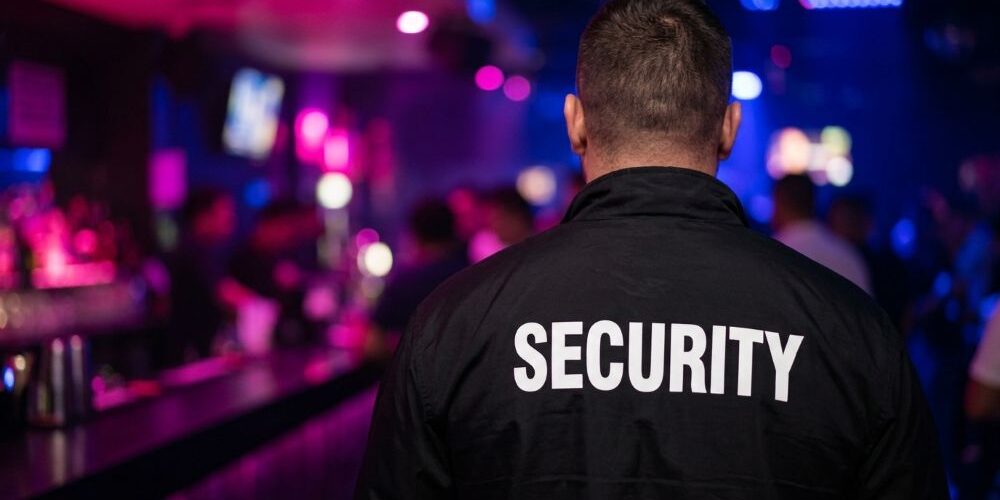
Effective nightclub and bar security is the foundation of a safe, legally compliant venue that protects patrons, staff, and your liquor license. When security operations are well-planned, incidents are prevented before they escalate, and your guests enjoy the night without fear.
Table of Contents
Why Venue Security Is Non-Negotiable in 2026
Core Duties of Nightclub and Bar Security Staff
Crowd Control Tactics That Actually Work
Legal Requirements and Licensing for Bar Security
How to Hire the Right Security Team for Your Venue
What to Look for in a Security Service Provider
Key Takeaways
- A structured security plan covers entry control, interior monitoring, and emergency response, not just having staff at the door.
- Crowd control is most effective when it combines physical positioning, communication protocols, and de-escalation training.
- Security personnel at bars and clubs must meet state-specific licensing requirements before working your venue.
- Hiring through a professional security service like Instaguard Security Services gives you vetted, trained, and insured personnel.
- Your security setup directly affects your venue’s liability exposure, insurance premiums, and ability to retain your liquor license.
- Technology such as ID scanners and CCTV systems should supplement, not replace, trained human security staff.
Why Venue Security Is Non-Negotiable in 2026
Running a bar or nightclub in 2026 means operating in an environment where legal scrutiny, patron expectations, and safety risks are all elevated. Alcohol-fueled environments create predictable pressure points: disputes over entry, intoxicated guests, overcrowding, and the rare but serious threat of violence or weapon incidents.
Beyond the immediate safety concerns, venue operators face significant legal exposure when incidents occur. In many states, dram shop laws hold bars and nightclubs partially liable when an intoxicated patron causes harm to a third party. According to the National Conference of State Legislatures, most U.S. states have some version of dram shop liability, meaning that inadequate security can directly contribute to costly lawsuits.
Your liquor license is also at stake. State alcohol control boards can suspend or revoke licenses if a venue is linked to repeated incidents of violence or disorder. A professional security presence is one of the clearest ways to demonstrate responsible operations to regulators.
Beyond liability, patrons vote with their feet. A venue with a reputation for chaotic nights, fights, or poor crowd management will struggle to retain its customer base. Security is as much a business investment as it is a safety measure.
Core Duties of Nightclub and Bar Security Staff
Security personnel at a venue do far more than stand at the door looking intimidating. Their responsibilities span the full arc of a guest’s experience, from the moment someone approaches the entrance to the time the last patron leaves safely.
Entry Control and ID Verification
The front door is the first line of defense. Security staff are responsible for checking IDs to prevent underage drinking, identifying guests who are already visibly intoxicated before they enter, enforcing dress codes, and screening for prohibited items. An ID scanner is a useful tool here, but a trained eye catches things technology misses, including borrowed IDs or aggressive behavior in line.
Interior Monitoring and Positioning
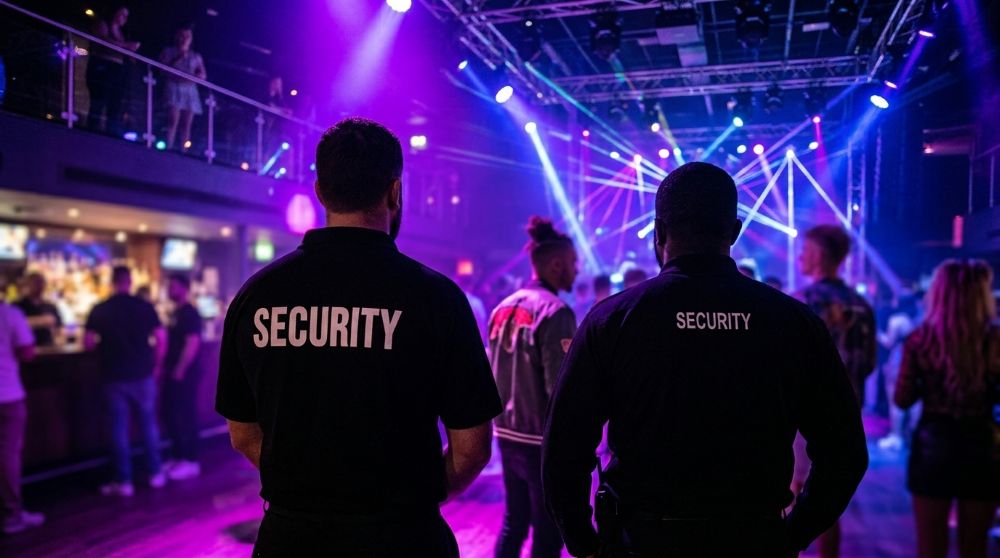
Inside the venue, security staff should be posted at strategic points: near the bar, on the dance floor perimeter, at emergency exits, and near VIP areas if applicable. Their presence alone deters most disruptive behavior. More importantly, they observe the crowd continuously, watching for signs of intoxication, conflict brewing between patrons, or medical emergencies like someone losing consciousness.
Incident Response and De-Escalation
When an incident does occur, the response protocol matters enormously. Security staff should be trained to de-escalate verbal conflicts before they become physical, remove disruptive individuals firmly but without unnecessary force, and contact emergency services when needed. The goal is containment and resolution, not confrontation.
Closing Time Procedures
The period around last call and closing time is statistically one of the highest-risk windows. Security teams should manage the dispersal of patrons, coordinate with parking staff or rideshare pickup zones, and ensure no one who is impaired leaves behind the wheel if possible.
| Security Duty | Location | Risk Window |
| ID and entry screening | Front entrance | Opening through peak hours |
| Crowd monitoring | Dance floor, bar area | Peak hours |
| VIP and section management | VIP areas, booths | Throughout event |
| Conflict de-escalation | Anywhere in venue | Peak hours and last call |
| Closing dispersal | Exits, parking areas | Last call to close |
| Emergency response | Venue-wide | Any time |
Crowd Control Tactics That Actually Work
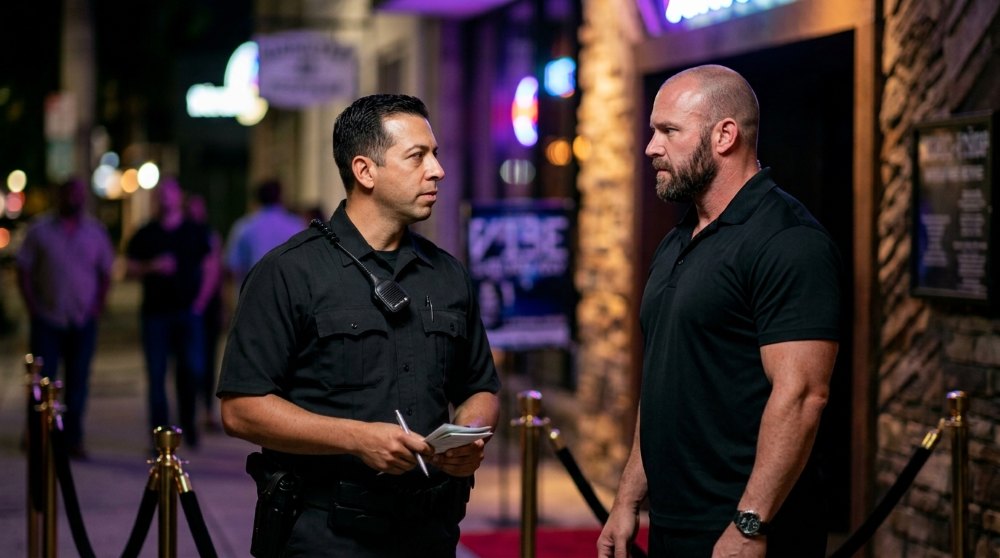
Crowd control is both a science and a skill. It is not simply about physical presence; it requires planning, communication, and real-time decision-making.
Capacity Management
Every venue has a legal maximum occupancy set by the fire marshal. Exceeding it is a code violation and a genuine safety hazard. Security staff should track headcount actively throughout the night, not just at the door. A clicker counter, wristband system, or digital capacity tool keeps this manageable.
Traffic Flow Design
The physical layout of your venue affects how crowds behave. Bottlenecks near the bar or at narrow hallways create friction that can ignite conflicts. Work with your security team to identify and address these pinch points. Clear signage for exits, restrooms, and entry points reduces confusion and keeps movement orderly.
Communication Protocols
Security personnel need reliable communication gear, typically earpiece radios, so that the team operates as a coordinated unit rather than isolated individuals. A guard at the bar who spots trouble should be able to alert the door within seconds. A venue where security staff cannot communicate quickly is a venue that will struggle to contain incidents.
De-Escalation Training
Physical intervention should always be the last option. Guards trained in verbal de-escalation can diffuse the vast majority of conflicts before they become fights. This includes tone control, body language awareness, and knowing when to call for backup versus handling a situation alone. The Crisis Prevention Institute offers nationally recognized de-escalation training programs used by security professionals across the country.
Handling Intoxicated Patrons
Refusing service or removing an already-intoxicated patron requires care. Security staff should coordinate with bartenders, who in many states have independent legal obligations under responsible beverage service laws. A smooth handoff between bar staff and security prevents confrontations from spiraling.
Legal Requirements and Licensing for Bar Security
Before you hire anyone to work security at your venue, you need to understand what your state requires. Security guard licensing is regulated at the state level in the U.S., and the rules vary considerably.
Most states require security guards to hold a valid guard card or security officer license issued by the state’s Department of Consumer Affairs, Department of Public Safety, or equivalent agency. Many states also require a minimum number of training hours before a guard can legally work. In California, for example, the Bureau of Security and Investigative Services (BSIS) mandates 40 hours of training for licensed guards.
States like Texas require licensing through the Texas Department of Public Safety, where guards must pass background checks and complete a training curriculum before being registered. New York, Florida, Illinois, and other high-population states each have their own distinct requirements.
For venue operators, the practical takeaway is straightforward: every security guard working your venue must be properly licensed for your state. If an incident occurs and you are found to have used unlicensed security personnel, your liability exposure increases dramatically and your liquor license could be at risk.
Working with a professional security service handles this burden on your behalf. Reputable providers handle all licensing verification, training documentation, and compliance tracking internally.
How to Hire the Right Security Team for Your Venue
Hiring security for a nightclub or bar is not the same as hiring a general security guard. You need personnel who have specific experience in high-energy, alcohol-present environments, and who can work effectively under pressure.
Determine Your Staffing Needs First
The number of guards you need depends on your venue’s capacity, layout, and event type. A general rule used in the industry is one security officer per 50 to 75 patrons, though high-risk events or venues with a history of incidents should increase that ratio. Consider staffing needs separately for the door, interior, and closing duties.
Check for Relevant Experience
Ask candidates or security companies about direct experience in bar and nightclub environments. General commercial security experience does not translate automatically. Someone who has patrolled an office building overnight has very different skills than someone who has managed a 500-person nightclub crowd on a Saturday.
Verify Insurance and Bonding
Any security firm you hire should carry general liability insurance and workers’ compensation coverage. If a guard injures a patron or is injured themselves during a shift, you need to know that the firm’s insurance, not yours, will be the primary coverage. Ask for certificates of insurance before signing any contract.
Conduct a Venue Walk-Through
A professional security service will want to assess your venue in advance. This walk-through allows them to identify entry points, blind spots, emergency exit locations, and crowd flow patterns before the first shift. If a provider skips this step, that is a sign they are not approaching the engagement seriously.
What to Look for in a Security Service Provider
Choosing the right security company is one of the most consequential decisions a venue operator makes. The wrong provider puts your patrons, your staff, and your business at risk.
Licensing and Compliance Track Record
Your provider should be fully licensed as a security agency in your state, not just employing licensed individuals. Ask about their internal compliance process: how do they track license renewals, background check cycles, and training updates?
Specialized Venue Experience
Instaguard Security Services is one example of a security guard service built to handle the specific challenges that bars, nightclubs, and event venues face. Providers like this bring established crowd management protocols, trained personnel, and operational infrastructure that individual hires simply cannot match.
Transparent Pricing and Contracts
Security service contracts should be clear about billing rates, minimum staffing hours, cancellation terms, and what happens if a scheduled guard cannot make a shift. Hourly rates for licensed security staff in entertainment venues vary by market and region, so get itemized quotes and compare them carefully.
References from Similar Venues
Ask any prospective security company for references specifically from bars, clubs, or entertainment venues. A company that can only point to corporate clients or retail locations may not have the operational playbook your environment demands.
Communication and Reporting
After every shift, you should receive an incident report covering anything notable that occurred: IDs flagged, patrons removed, medical calls, or law enforcement interactions. A security provider that cannot deliver consistent documentation is not operating at a professional standard. The International Foundation for Protection Officers outlines professional reporting standards that reputable firms follow.
For venue operators who want to understand the broader regulatory framework around public assembly safety, the U.S. Fire Administration publishes guidelines on occupancy limits and emergency egress standards that directly affect how security teams should be deployed.
Strong nightclub and bar security is a layered system: the right personnel, the right training, the right legal compliance, and the right operational partner working together so your venue can operate confidently every night it opens.
YOU MAY ALSO LIKE: How Do You Hire Security for an Event? Best Practices and a Real Cost Guide
Frequently Asked Questions
How many security guards does a bar or nightclub actually need?
The standard industry ratio is one security officer for every 50 to 75 patrons, but your specific venue layout, event type, and local regulations will influence that number.
A venue with multiple floors, a large outdoor patio, or a history of incidents should staff above that baseline ratio. You also need to account for role-specific positions: door staff, interior monitors, and closing crew each serve distinct functions, so a venue with 300 guests may need five or more guards rather than the four that a simple headcount ratio might suggest. Walk through your venue with your security provider before finalizing staffing numbers.
What is the difference between a bouncer and a licensed security guard?
A licensed security guard has completed state-mandated training, passed a background check, and holds a valid guard card, while the term “bouncer” typically refers to an unlicensed individual hired informally for physical deterrence.
Using unlicensed personnel at your venue creates significant legal exposure. If an incident occurs involving an unlicensed worker, your liability as the venue operator increases substantially, and your liquor license could be flagged by the state alcohol control board. In most states, anyone performing security functions for pay at a public venue is legally required to be licensed, regardless of what title you give them.
Can security guards physically remove someone from a bar or nightclub?
Yes, security personnel can use reasonable force to remove a disruptive or trespassing individual, but that force must be proportional to the threat and must stop once the person is no longer resisting.
Excessive force by security staff exposes the venue to civil liability and potential criminal charges against the guard. Trained security officers are taught to prioritize verbal de-escalation, then escort techniques, with physical restraint used only when a patron presents a direct danger to themselves or others. Any physical removal should be documented in a post-shift incident report, noting what occurred, what force was used, and whether law enforcement was contacted.
Does my bar need security if it is a smaller, low-key venue?
Even smaller venues benefit from at least one trained security professional on staff during operating hours, because alcohol service creates liability exposure regardless of venue size.
A low-key bar with 80 guests is not immune to intoxicated patron incidents, medical emergencies, or late-night conflicts. In fact, smaller venues sometimes underestimate their risk because they associate incidents with large clubs. Beyond patron safety, your state alcohol control board and local ordinances may require a security presence during certain hours or events regardless of capacity. Consulting with a licensed security service to assess your specific risk level is a practical first step.
What questions should I ask a security company before signing a contract?
Before committing to any security service, ask about state licensing status, proof of liability insurance, experience in bar and nightclub environments, staffing backup procedures, and their incident reporting process.
You should also ask how they handle a situation where a scheduled guard calls out: do they have a bench of available personnel to fill the gap quickly, or will you be left short-staffed? Request references from comparable venues and review sample incident reports to gauge documentation quality. A reputable provider like Instaguard Security Services will answer these questions transparently and provide documentation without hesitation, which is a reliable indicator that they operate at a professional standard.
The Bottom Line on Nightclub and Bar Security
Effective nightclub and bar security is not an afterthought or a line item to minimize. It is an operational pillar that directly affects patron safety, staff wellbeing, your legal standing, and the long-term reputation of your venue. Every decision you make about staffing levels, guard training, crowd control protocols, and provider selection has real consequences on the nights when pressure peaks and things go sideways fast.
The smartest move a venue operator can make is to partner with a professional security service before problems arise, not after. Instaguard Security Services brings the trained personnel, compliance infrastructure, and venue-specific experience that bars and nightclubs need to operate safely and confidently. Review your current setup, identify the gaps, and reach out to a qualified security provider to schedule a venue assessment today.
READ MORE: Workplace Violence Prevention: How Security Guards Protect Employees Every Day
This content is for informational purposes only and is not legal, insurance, or compliance advice. California security licensing requirements and regulations may change. For a tailored security assessment or to confirm current service options, contact Instaguard Security at (800) 786-0698 or visit instaguardinc.com.