

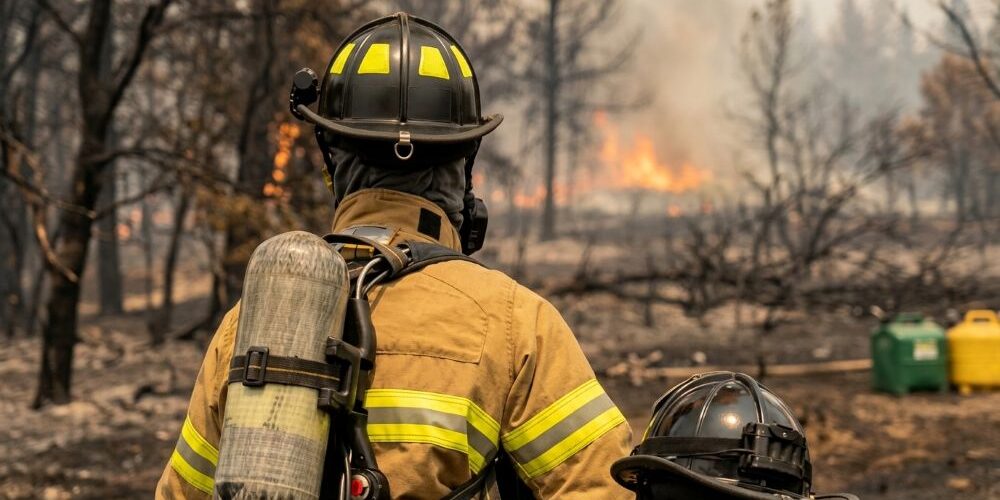
When a wildfire forces you to evacuate your Los Angeles property, your physical safety is the immediate priority, but your home does not stop being vulnerable the moment you leave. Vacant and evacuated properties face a sharp rise in theft, looting, and vandalism during wildfire events, making professional security coverage a critical layer of protection alongside fire suppression efforts.
Table of Contents
Why Evacuated Properties in LA Are High-Risk Targets
What Happens to Your Property During a Wildfire Evacuation
Physical Security Measures Every Property Owner Should Deploy
The Role of Professional Security Guards in Wildfire Zones
Technology and Monitoring Tools That Support Fire Season Security
Comparing Your Security Options During an Evacuation
Insurance, Legal Considerations, and Documentation
Key Takeaways
- Evacuated properties in LA are prime targets for opportunistic theft and looting, especially in areas under mandatory evacuation orders.
- Physical deterrents such as reinforced locks, motion lighting, and visible security signage reduce risk but are not sufficient on their own.
- Professional security guard services can legally patrol evacuated zones in coordination with local law enforcement.
- Remote monitoring tools, including cameras with cellular backup, extend your protection when power and internet are unreliable.
- Documenting your property’s condition before evacuation strengthens any insurance claim filed after a wildfire event.
- Engaging a licensed security provider before fire season peaks gives you faster access to coverage when evacuation orders are issued.
Why Evacuated Properties in LA Are High-Risk Targets
Los Angeles has one of the longest and most intense wildfire seasons in the country, with red flag conditions now extending well beyond the traditional fall window. When evacuation orders go out across neighborhoods in the foothills, canyons, and coastal communities, entire streets empty within hours. That creates a predictable window of opportunity for criminals.
Law enforcement agencies face enormous strain during wildfire events. Officers are redirected to traffic management, perimeter control, and life-safety operations. Patrol frequency in residential neighborhoods drops substantially. Criminals who monitor evacuation news, scanner apps, and social media posts know exactly which zip codes are unoccupied, and for how long.
Beyond straightforward burglary, evacuated properties are also vulnerable to copper wire theft, catalytic converter removal, and even arson unrelated to the wildfire itself. Properties closer to the fire line but not yet destroyed are particularly exposed, since they sit in a gray zone where both fire crews and police have limited bandwidth.
The California Department of Forestry and Fire Protection (CAL FIRE) notes that wildfire-affected communities consistently report secondary crime spikes during and immediately after major fire events. Understanding this pattern is the first step in building a response before the next evacuation order arrives.
What Happens to Your Property During a Wildfire Evacuation
Evacuation orders in Los Angeles are issued in two forms: voluntary and mandatory. Under a mandatory evacuation, most residents leave, but access restrictions vary widely. First responders and credentialed personnel can pass through checkpoints, but homeowners are typically barred from returning until the order is lifted, sometimes for days or even weeks.
During this window, your property is essentially unmonitored unless you have pre-arranged security coverage. Alarm systems may be functional if power remains on, but most home alarms rely on internet or phone lines that can fail when cell towers are overwhelmed or utility infrastructure is damaged.
Insurance policies in California are increasingly scrutinized in the wake of wildfire losses. If theft or vandalism occurs during an evacuation and you cannot document the pre-loss condition of your property, claim disputes become significantly more complicated. The California Department of Insurance provides guidance on wildfire-related claims, but the burden of proof on condition and timeline still falls heavily on the homeowner.
Understanding the exact evacuation zone you are in, whether Zone A, B, or C under the LA County system, directly affects what security options are legally available. Some private security firms hold permits that allow their personnel to access restricted zones, which is a key differentiator when selecting a provider.
Physical Security Measures Every Property Owner Should Deploy
Before evacuation season begins, there is a practical checklist every LA property owner should work through. These steps will not replace professional oversight, but they reduce your exposure significantly when layered with other approaches.
Before you leave:
- Reinforce door frames and deadbolts on all exterior doors.
- Install motion-activated floodlights on all sides of the property.
- Place visible security cameras, ideally with cellular backup, at entry points.
- Secure or remove high-value portable items such as tools, bicycles, and outdoor electronics.
- Set interior lights on timers to simulate occupancy.
- Post visible security service signs, which serve as a deterrent even when no guard is present.
- Take timestamped photos and video of every room and all valuables.
Property hardening for fire risk runs parallel to security hardening. Clearing defensible space, boxing in vents, and storing combustibles away from the structure all reduce fire spread risk. The Insurance Institute for Business and Home Safety (IBHS) publishes research-backed property hardening guidelines specifically relevant to wildfire-prone regions.
Physical measures are strongest when they are visible and layered. A single camera with no monitoring behind it does not stop a determined thief. Combined with active guard patrols, remote monitoring, and neighbor awareness programs, the deterrent effect compounds significantly.
The Role of Professional Security Guards in Wildfire Zones
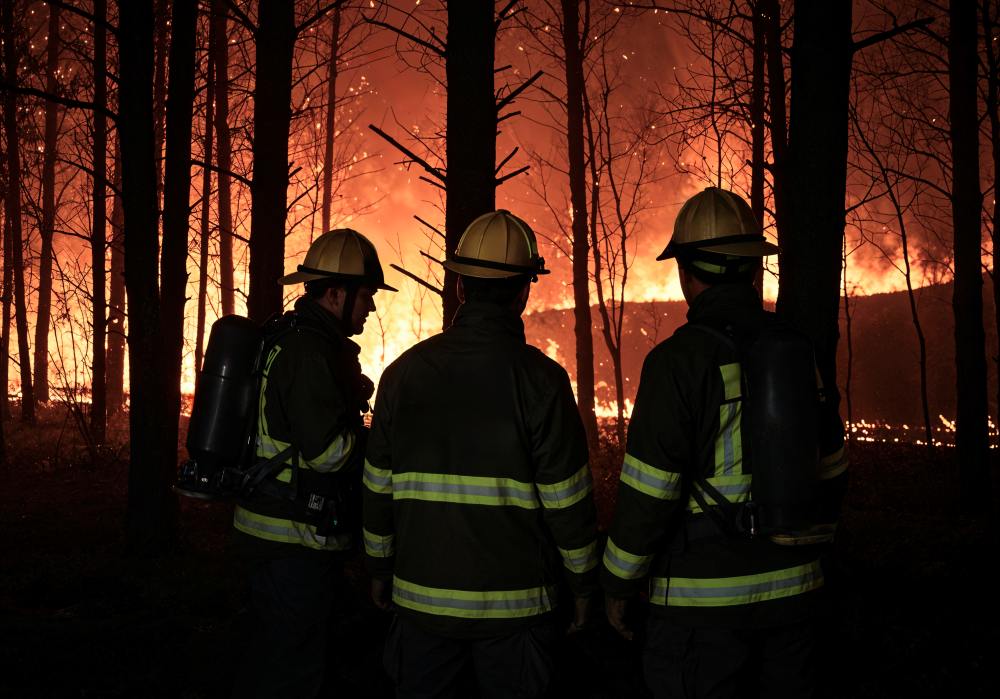
Wildfire Season Security: Protecting Vacant and Evacuated Properties in LA requires more than passive technology. It requires trained personnel who can respond in real time, document incidents, and coordinate with law enforcement at checkpoints.
Instaguard Security Services provides licensed security guard coverage specifically designed for situations like wildfire evacuations. Their personnel are trained to operate in high-stress, rapidly changing environments where access restrictions, road closures, and shifting fire lines are part of the daily reality. A uniformed guard on patrol sends a clear signal to would-be opportunists: this property is being watched.
Security guards deployed to evacuated properties typically perform the following functions:
- Foot and vehicle patrols at scheduled and randomized intervals.
- Incident documentation and reporting for insurance and law enforcement use.
- Real-time communication with local law enforcement at evacuation perimeters.
- Visual assessment of fire-related structural damage for owner notification.
- Deterrence of unauthorized access by media, looters, and trespassers.
One operational consideration worth understanding is that not all security firms are equipped to work within active evacuation zones. Entry to restricted areas requires coordination with the Los Angeles County Sheriff’s Department or the California Highway Patrol. Instaguard Security Services maintains the relationships and credentials necessary to support clients even in the most restricted evacuation scenarios.
Technology and Monitoring Tools That Support Fire Season Security
Physical guards are most effective when paired with technology that extends their situational awareness. During wildfire evacuations, standard home security infrastructure often fails, which means you need systems built for disruption.
Cellular-connected cameras are the single most important upgrade for any LA property owner in a fire-prone area. Unlike Wi-Fi cameras, which fail when your router loses power or your ISP goes down, cellular cameras continue transmitting over LTE or 5G networks as long as towers remain functional. Several systems now offer solar-powered cellular cameras that maintain operation even during extended power outages.
Remote monitoring centers add a human layer to your camera network. Rather than relying on alerts to your phone, which you may not be checking while displaced, a monitoring center can observe live feeds and dispatch personnel or contact law enforcement on your behalf.
GPS-tracked patrol vehicles allow security firms to provide clients with verifiable patrol logs, showing exactly when and where their property was checked. This documentation has real value in insurance proceedings.
The National Institute of Standards and Technology (NIST) has published frameworks on physical security and monitoring systems that are increasingly being adopted by private security providers operating in high-risk geographic zones.
A reliable technology stack for an evacuated LA property might include:
| Technology | Primary Benefit | Backup Power Needed |
| Cellular cameras | Continues during internet outage | Battery or solar recommended |
| Remote monitoring center | Human oversight, dispatch capability | Handled by provider |
| Motion-activated lighting | Deters approach at night | Battery backup recommended |
| GPS patrol vehicle tracker | Verifiable patrol documentation | Powered by vehicle |
| Smart lock with audit log | Entry record without key management | Battery-operated |
Comparing Your Security Options During an Evacuation
Property owners in LA typically weigh three approaches when a wildfire evacuation looms. Each has distinct trade-offs depending on property type, budget, and risk profile.
Option 1: DIY technology only Lower upfront cost, no recurring service fees. However, effectiveness depends heavily on infrastructure availability. Camera feeds become useless if you cannot view them, and no one is responding to alerts on your behalf. Best suited for lower-risk properties in areas with strong cellular coverage.
Option 2: Remote monitoring service A monitoring company watches your cameras and contacts authorities when motion is detected. More responsive than pure DIY, but still limited by camera placement and lighting conditions. No on-site presence to physically deter or document.
Option 3: Professional security guard service The most comprehensive coverage. Guards from Instaguard Security Services can patrol, document, respond, and coordinate with law enforcement. Higher cost than technology-only solutions, but appropriate for high-value properties, areas with documented theft histories, or properties that contain items difficult to replace.
For many LA homeowners, a hybrid approach combining remote-monitored cameras with scheduled guard patrols from a provider like Instaguard Security Services delivers the best balance of cost, coverage, and responsiveness.
Insurance, Legal Considerations, and Documentation
California homeowners are navigating a difficult insurance landscape. Multiple major carriers have pulled back from or significantly restricted coverage in wildfire-prone counties. For those who still carry coverage, the claims process after a wildfire evacuation requires clear documentation.
If theft or vandalism occurs at your property during an evacuation, you will need to establish a timeline of what was present before the event and what was taken or damaged during it. Timestamped photos, videos, and smart device activity logs all contribute to this record. Security patrol logs from a licensed provider like Instaguard Security Services carry particular weight because they constitute third-party documentation of your property’s condition and any observed incidents.
From a legal standpoint, California Penal Code prohibits looting in areas under a state of emergency, with enhanced penalties under California Penal Code Section 463. Knowing that legal framework exists is useful, but enforcement still depends on incident reporting and evidence preservation, both of which a security provider can support directly.
Wildfire Season Security: Protecting Vacant and Evacuated Properties in LA is not a one-time decision. It is an ongoing planning process that should begin before fire season intensifies, not after an evacuation order is already issued. Reviewing your insurance policy annually, updating your property documentation, and establishing a relationship with a licensed security provider like Instaguard Security Services positions you to act faster and with more confidence when conditions deteriorate.
For broader context on California’s emergency management infrastructure, the Governor’s Office of Emergency Services (Cal OES) maintains updated resources on evacuation zones, property re-entry procedures, and disaster recovery programs available to Los Angeles County residents.
YOU MAY ALSO LIKE: When Is Fire Watch Required in California? Fire Code Rules Explained

Frequently Asked Questions
Can a private security guard legally enter an evacuated zone in Los Angeles?
Yes, licensed security guards can access evacuated zones under specific conditions, typically when coordinated with local law enforcement or county emergency management.
Private security firms operating in Los Angeles must work within the access framework established by the LA County Sheriff’s Department and California Highway Patrol at evacuation checkpoints. Providers like Instaguard Security Services maintain the credentials and interagency relationships necessary to gain authorized entry, which is a critical distinction from simply hiring any available security firm during an emergency.
How soon should I arrange security coverage before a wildfire evacuation?
You should arrange security coverage before fire season peaks, ideally in late spring, not after an evacuation order has already been issued.
Once an evacuation order goes out, demand for licensed security services in LA surges almost immediately. Firms that were not already contracted are quickly at capacity, and logistical complications such as road closures and access restrictions make last-minute arrangements far more difficult to execute. Establishing a pre-season agreement with a provider like Instaguard Security Services ensures you have confirmed coverage that can activate rapidly when conditions deteriorate.
Will my homeowner’s insurance cover theft that occurs during a wildfire evacuation?
Most standard homeowner’s insurance policies do cover theft during a wildfire evacuation, but the claims process requires documented proof of what was present and what was taken.
The California Department of Insurance advises policyholders to maintain up-to-date home inventories, including timestamped photographs and video walkthroughs, specifically to support post-disaster claims. Without this documentation, insurers may dispute the value or existence of stolen items. Security patrol logs from a licensed firm serve as third-party evidence of your property’s condition at specific points in time, which can significantly strengthen your position during a claim review.
What is the difference between a voluntary and mandatory evacuation order, and how does it affect security options?
A voluntary evacuation is a recommendation to leave, while a mandatory evacuation is a legal order requiring departure, and each creates a different legal and logistical environment for property security.
Under a voluntary evacuation, homeowners can still access their property and arrange security measures directly. Under a mandatory order, access is restricted to credentialed personnel, which means only security firms with established law enforcement coordination can legally patrol your property. Understanding which type of order applies to your zone, whether Zone A, B, or C under the LA County system, determines what security options are immediately available to you and how quickly a provider like Instaguard Security Services can deploy to your address.
Are security cameras alone enough to protect my property during an LA wildfire evacuation?
Cameras alone are rarely sufficient during a wildfire evacuation because the infrastructure they depend on, including power, internet, and your own availability, is often compromised during the event.
Cellular-connected cameras with battery or solar backup significantly improve reliability compared to standard Wi-Fi systems, but they still require someone to monitor the feed and take action when an alert is triggered. A remote monitoring service adds a human response layer, and professional security guard patrols from a firm like Instaguard Security Services add an on-site physical deterrent that no camera system can replicate. For high-value properties or areas with documented theft histories during prior evacuations, a layered approach combining cameras, remote monitoring, and guard coverage is the most effective solution available.
Wildfire Season Security in LA: Protecting Vacant and Evacuated Properties
Protecting your property during a wildfire evacuation demands preparation that begins well before smoke appears on the horizon. Passive measures like cameras and smart locks provide a foundation, but they require active monitoring, reliable infrastructure, and a human response capability to translate into real protection. Professional security guard services, paired with the right technology, close that gap in a way that DIY solutions simply cannot match.
Instaguard Security Services offers licensed, trained security personnel with direct experience operating in Los Angeles evacuation environments. Whether your property is in the foothills, a canyon community, or a coastal neighborhood with fire exposure, the time to establish coverage is now. Contact Instaguard Security Services to discuss a pre-season security plan tailored to your property’s specific risk profile, access zone, and coverage needs.
READ MORE: Nightclub and Bar Security: Duties, Crowd Control and Hiring Tips for Venue Owners
This content is for informational purposes only and is not legal, insurance, or compliance advice. California security licensing requirements and regulations may change. For a tailored security assessment or to confirm current service options, contact Instaguard Security at (800) 786-0698 or visit instaguardinc.com.