

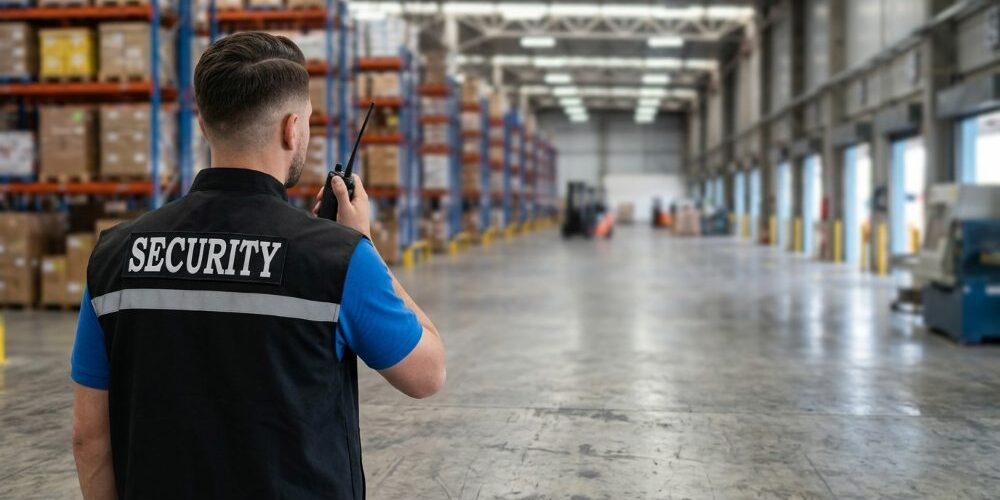
Warehouses are high-value targets for theft, and without a structured prevention strategy, losses can compound quickly across inventory, equipment, and employee productivity. This Warehouse Security Guide: How to Prevent Theft in Industrial Facilities breaks down the most effective tools, policies, and personnel strategies available to U.S. facility managers in 2026.
Table of Contents
Why Warehouse Theft Is a Serious Business Risk
Physical Security Layers Every Warehouse Needs
Access Control Systems and Their Role in Theft Prevention
The Role of Security Personnel in Industrial Facilities
Surveillance Technology That Actually Works
Internal Theft: Policies and Culture That Close the Gap
Building a Security Audit Routine
Key Takeaways
- Warehouse theft includes both external break-ins and internal employee theft, and your security plan must address both.
- Layered physical security — fencing, lighting, barriers, and signage — deters opportunistic criminals before they ever enter the building.
- Access control systems should restrict employee movement to only the zones relevant to their job function.
- Professional security personnel, such as those provided by Instaguard Security Services, add a human intelligence layer that technology alone cannot replicate.
- Surveillance cameras are most effective when paired with real-time monitoring rather than used purely for after-the-fact review.
- Regular security audits catch vulnerabilities before they become incidents.
Why Warehouse Theft Is a Serious Business Risk
Theft in industrial facilities is not a minor inconvenience. It is a compounding operational problem that affects inventory accuracy, insurance premiums, employee morale, and ultimately your bottom line. The National Retail Federation tracks shrink data annually and consistently identifies organized retail crime and internal theft as two of the leading causes of inventory loss across the supply chain, including at the distribution and warehouse level.
For large facilities handling electronics, pharmaceuticals, consumer goods, or high-value equipment, a single successful theft event can result in losses ranging from thousands to hundreds of thousands of dollars. When you factor in the cost of investigations, downtime, re-orders, and reputational damage with clients, the true impact is almost always larger than the face value of the stolen items.
What makes warehouses particularly vulnerable is their operational complexity. Multiple entry points, shift changes, high employee turnover, and a constant flow of third-party vendors and delivery drivers all create opportunities for theft that a retail storefront simply does not face. Addressing these risks requires a structured, layered approach rather than a single solution.
Physical Security Layers Every Warehouse Needs
Think of physical security as a series of concentric rings around your facility. Each ring needs to be hardened before an intruder reaches the next one.
Perimeter Security
Your outer boundary is your first line of defense. A well-maintained perimeter fence, ideally at least 8 feet high with anti-climb features, immediately raises the effort required for an unauthorized entry. Pair this with vehicle barriers or bollards at loading dock entrances to prevent ram-raid style incidents. The Cybersecurity and Infrastructure Security Agency (CISA) provides physical security resources for critical infrastructure and commercial facilities that outline perimeter hardening best practices.
Lighting
Adequate lighting is one of the highest-return investments in warehouse security. Poorly lit parking lots, loading docks, and exterior corridors are magnitudes more inviting to opportunistic thieves. Motion-activated floodlights covering all exterior blind spots are a baseline requirement. Areas where trucks park overnight deserve particular attention.
Signage and Deterrents
Visible warning signs indicating 24-hour surveillance, guard patrols, and prosecution policies create a psychological deterrent. Criminals weigh risk against reward. Clear messaging that your facility is actively monitored tilts that calculation against them.
Entry Point Hardening
All pedestrian and vehicle entry points should use reinforced doors, heavy-duty locks, and anti-tamper hardware. Loading dock doors are a frequent target because they are large, often used during overnight hours, and sometimes left unattended. Installing dock door alarms and integrating them with your central monitoring system closes this gap significantly.
Access Control Systems and Their Role in Theft Prevention
Access control is the operational backbone of internal theft prevention. When employees, contractors, and visitors can only reach areas relevant to their specific role, the opportunity for theft shrinks dramatically.
Modern access control systems range from basic keycard readers to biometric scanners and mobile credential platforms. For most mid-to-large warehouses, a keycard or fob-based system tied to a central software platform provides a practical balance of security and cost. The National Institute of Standards and Technology (NIST) publishes identity and access management guidelines that can help security teams evaluate system design.
Key principles to build into your access control policy include:
- Role-based access: A forklift operator has no reason to enter the server room or a cage storing high-value inventory. Restrict access accordingly.
- Time-based restrictions: Limit access to shift hours only. If an employee badge is used at 3 a.m. when the employee is not scheduled to work, your system should flag the anomaly automatically.
- Visitor credentialing: Every vendor, contractor, and delivery driver should receive a temporary badge with logged access. No exceptions.
- Audit trails: Your system should log every access event. These logs are critical during incident investigations and should be reviewed periodically rather than only after a theft occurs.
The Role of Security Personnel in Industrial Facilities
Technology is powerful, but it has limits. Cameras do not intervene. Access control systems do not respond to a situation developing in a blind spot. Professional security personnel bring judgment, presence, and real-time decision-making that no hardware system can replicate.
For warehouses with significant inventory value or complex operations, on-site security officers serve several functions simultaneously. They conduct roving patrols that make the environment unpredictable for anyone planning internal theft. They verify credentials at entry points, observe employee and visitor behavior, and serve as the first responder to incidents before law enforcement arrives.
Instaguard Security Services specializes in providing trained industrial security personnel for warehouse and distribution environments. A professional security guard service like Instaguard brings facility-specific training, consistent patrol protocols, and accountability reporting that gives facility managers visibility into what is happening on-site at all hours.
When evaluating a security guard service for your facility, look for:
- Officers trained specifically in warehouse and industrial environments, not just general commercial security
- Documented patrol logs and incident report formats
- Communication protocols that connect on-site officers with your operations management team
- Experience with both access control enforcement and emergency response procedures
The human layer of security is particularly important during shift changes, high-traffic delivery windows, and overnight hours when supervision from management is reduced.
Surveillance Technology That Actually Works
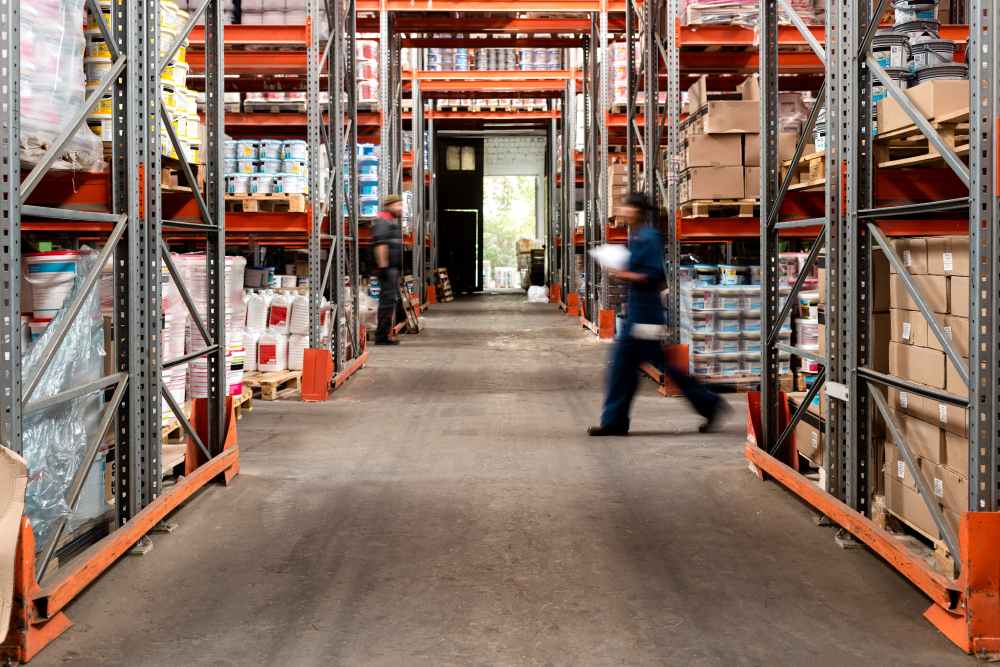
A surveillance system is only as effective as the monitoring behind it. Many facilities install cameras for compliance or insurance purposes and then review footage only after an incident occurs. This reactive approach misses a critical opportunity to catch theft in progress or identify suspicious behavior patterns before they escalate.
Camera Placement Strategy
High-priority camera placement locations in a warehouse include:
- All entry and exit points, including emergency exits
- Loading docks and receiving areas
- High-value inventory storage areas and cages
- Employee break rooms and locker areas (exterior views only, respecting privacy regulations)
- Parking lots and perimeter fence lines
- Server rooms and control panels
Resolution and Coverage
Modern IP cameras offer significantly better image quality than older analog systems. For facial recognition and license plate capture, resolution matters considerably. A 4K camera covering a loading dock entrance can identify a driver or vehicle in a way that an older 720p camera simply cannot. The Electronic Security Association provides industry standards and resources for commercial surveillance installations.
Real-Time Monitoring
Where budget permits, connecting your surveillance system to a monitored security operations center, either in-house or through a third-party monitoring service, converts your cameras from a documentation tool into an active deterrent. Monitored systems can trigger faster law enforcement response and, in some cases, allow operators to verbally address individuals via two-way audio before a situation escalates.
Internal Theft: Policies and Culture That Close the Gap
Estimates from the security industry consistently point to internal theft as accounting for a substantial portion of warehouse shrink. Employees who know inventory systems, shift schedules, and camera blind spots represent a qualitatively different threat than external criminals.
Addressing internal theft requires a combination of deterrence policy, cultural accountability, and operational controls.
Separation of Duties
No single employee should have unilateral control over both inventory management and shipping or receiving. When one person can approve a shipment and process it without oversight, the opportunity for fraud or theft is significant. Build in dual-verification requirements for high-value shipments.
Random Audits and Cycle Counts
Regular, unannounced inventory cycle counts disrupt the ability of an internal thief to mask losses over time. If employees know that any section of the warehouse may be audited at any given time, the window for concealing theft narrows considerably.
Anonymous Reporting Channels
Many theft incidents are reported by other employees who observe suspicious behavior but are reluctant to come forward directly. An anonymous tip line or digital reporting portal gives employees a way to report concerns without fear of retaliation. The Society for Human Resource Management (SHRM) offers guidance on establishing workplace reporting programs that are both legally compliant and culturally appropriate.
Clear Policies with Consistent Enforcement
Your employee handbook should contain explicit, unambiguous policies on theft, unauthorized removal of property, and the consequences for violations. Inconsistent enforcement, where some employees are disciplined and others are not for similar offenses, creates a culture where policy boundaries are seen as negotiable. Consistency is not just legally important; it is operationally critical.
Building a Security Audit Routine
Even the best security infrastructure degrades over time without regular review. Cameras develop blind spots as shelving configurations change. Access control lists grow stale with employee turnover. Patrol routes become predictable. A structured security audit routine keeps your defenses current and catches vulnerabilities before they are exploited.
A comprehensive warehouse security audit should cover:
| Audit Area | Frequency | Key Questions |
| Camera coverage and function | Monthly | Are all cameras operational? Are there new blind spots? |
| Access control user list | Quarterly | Are terminated employees removed? Are permissions current? |
| Perimeter integrity | Monthly | Is fencing intact? Is lighting functional? |
| Incident report review | Monthly | Are there patterns in incidents or near-misses? |
| Security personnel performance | Quarterly | Are patrol logs complete? Are officers following protocol? |
| Inventory reconciliation | Bi-weekly to monthly | Does physical count match system records? |
Engaging a third-party security consultant for an annual independent audit adds an outside perspective that internal teams often cannot provide, simply because familiarity with a facility creates blind spots of its own.
Documenting audit findings and tracking remediation timelines is equally important. An audit that identifies a problem but does not result in a corrective action is a liability, not an asset. Build a tracking system, even a simple spreadsheet, that assigns ownership and deadlines to every finding.
The Warehouse Security Guide: How to Prevent Theft in Industrial Facilities framework outlined in this article is most effective when it is treated as a living document. Facilities change, threat environments evolve, and what worked two years ago may have gaps today. Pairing your internal audit process with the expertise of a professional security service like Instaguard Security Services ensures that both the technology and human layers of your security program remain calibrated to your current operational reality.
READ MORE: Temporary Security Guard Services: When and How to Hire Short-Term Guards

Frequently Asked Questions
Q: How do I know if my warehouse needs professional security guards or if cameras alone are sufficient?
The right answer depends on your facility’s size, inventory value, and operational hours, but most mid-to-large warehouses benefit from both.
Cameras are an excellent documentation and deterrence tool, but they cannot intervene in real time. If your facility operates overnight shifts, handles high-value inventory, or experiences frequent vendor and contractor traffic, on-site security personnel fill critical gaps that surveillance technology simply cannot. A professional security service can also respond to incidents, enforce access control at entry points, and conduct behavioral observation that no camera system replicates.
Q: What is the most common type of theft in industrial warehouses?
Internal theft by employees or contractors is consistently identified as one of the most significant sources of inventory shrink in warehouse environments.
Employees have advantages that external criminals do not, including knowledge of inventory systems, camera placement, and shift schedules. This makes internal theft harder to detect and easier to conceal over time. Effective prevention requires a combination of access restrictions, separation of duties, random inventory audits, and anonymous reporting channels rather than relying solely on perimeter security.
Q: How often should a warehouse conduct a full security audit?
A comprehensive security audit should be conducted at minimum once per year, with targeted reviews of specific areas such as camera coverage and access control lists happening monthly or quarterly.
Annual audits benefit from involving a third-party security consultant who can identify blind spots that internal teams may overlook due to familiarity with the facility. Shorter-cycle reviews ensure that operational changes, such as new shelving layouts, staffing changes, or updated vendor lists, do not create security gaps between full audits. Documenting every finding and assigning remediation deadlines is as important as the audit itself.
Q: What access control system is best suited for a large warehouse operation?
A keycard or fob-based system integrated with role-based access permissions and a centralized audit log is a practical and effective starting point for most large warehouse operations.
Biometric systems offer a higher level of identity assurance and eliminate the risk of credential sharing, but they come with higher upfront costs and require more complex administration. For facilities with particularly sensitive inventory zones, a layered approach using standard keycard access for general areas and biometric verification for restricted zones provides strong protection without applying maximum-cost technology across the entire facility. Whatever system you choose, ensure it generates time-stamped access logs that can be reviewed and exported for incident investigations.
Q: How can warehouse managers address theft without damaging employee morale?
Framing security measures as policies that protect the entire workforce and the business, rather than as surveillance of individuals, is the most effective approach to maintaining morale while reducing theft.
Transparent communication about why security protocols exist, what employees can expect in terms of monitoring, and how anonymous reporting systems work removes the adversarial tone that can undermine trust. Consistent enforcement of policies across all levels of the organization, including management, signals that accountability is a shared value rather than a tool aimed at front-line workers. When employees understand that shrink directly affects business performance and job security, security culture tends to strengthen organically over time.
The Bottom Line on the Warehouse Security Guide: How to Prevent Theft in Industrial Facilities
Protecting an industrial facility from theft is not a one-time project. It is an ongoing operational discipline that requires physical infrastructure, technology, trained personnel, clear policy, and regular review working together as a cohesive system. No single layer of security is sufficient on its own, and gaps between layers are precisely where theft occurs.
If your current security posture relies too heavily on one component, whether that is cameras without monitoring, access control without audit trails, or policies without consistent enforcement, now is the time to identify and close those gaps. Start with a thorough walk-through of your facility using the audit framework outlined in this article, then prioritize remediation based on the value of assets at risk and the likelihood of each threat vector.
Instaguard Security Services is available to support warehouse and industrial facilities with professional security personnel and security service solutions tailored to the specific demands of distribution and storage environments. Reaching out to a qualified security service is a concrete next step that converts a security plan from a document into a functioning, staffed program.
READ MORE: When Is Fire Watch Required in California? Fire Code Rules Explained
This content is for informational purposes only and is not legal, insurance, or compliance advice. California security licensing requirements and regulations may change. For a tailored security assessment or to confirm current service options, contact Instaguard Security at (800) 786-0698 or visit instaguardinc.com.