
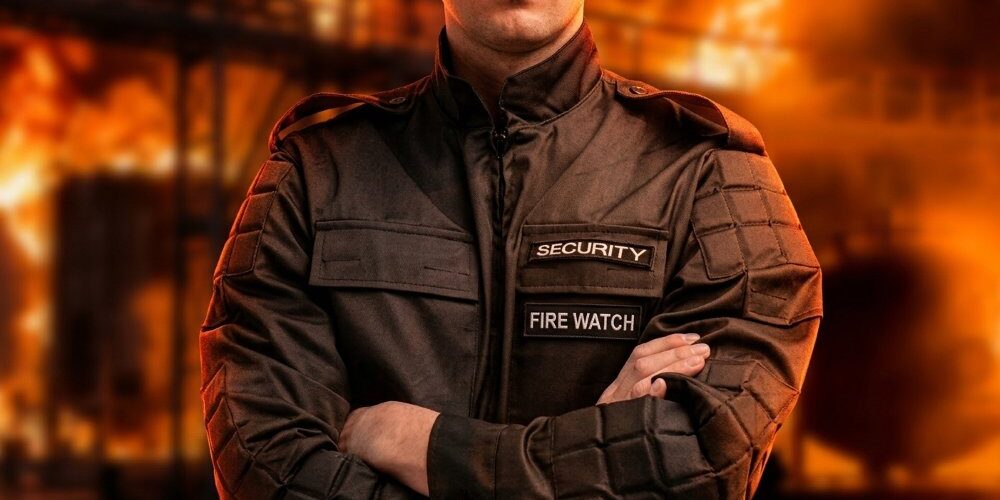
Fire watch is required in California when a building’s fire protection systems are impaired, out of service, or when specific high-risk conditions are present during construction, events, or occupancy. Under California’s fire code framework, property owners and contractors must post trained personnel to monitor for fire hazards any time these conditions are not corrected within a defined timeframe.
Table of Contents
What California Fire Code Says About Fire Watch
Common Triggers That Require Fire Watch
Fire Watch Duties and Patrol Requirements
Construction Sites and Special Events
Choosing Qualified Fire Watch Personnel
Consequences of Non-Compliance
Key Takeaways
- Fire watch is legally required in California when fire suppression or alarm systems are out of service for more than the threshold period set by the authority having jurisdiction (AHJ).
- The California Fire Code, which adopts and modifies the International Fire Code, governs most fire watch situations statewide.
- Trained fire watch personnel must conduct continuous patrols, maintain written logs, and have a clear communications plan in place.
- Construction sites, special events, and buildings with temporarily disabled sprinkler systems are the most common scenarios that trigger mandatory fire watch.
- Using a licensed security service with fire watch training helps ensure compliance and limits liability for property owners and general contractors.
- Penalties for failing to maintain proper fire watch can include stop-work orders, fines, and increased liability in the event of a fire.
What California Fire Code Says About Fire Watch
California enforces fire safety through the California Fire Code (CFC), which is published as Title 19 of the California Code of Regulations and largely incorporates the International Fire Code (IFC) with California-specific amendments. Local jurisdictions, whether Los Angeles County, San Francisco, or Sacramento, may layer additional requirements on top of the state baseline. The entity with authority to interpret and enforce these rules at the local level is called the Authority Having Jurisdiction, or AHJ. Always confirm local requirements with your city or county fire marshal before assuming the state baseline applies without modification.
The CFC references NFPA 101, the Life Safety Code, and NFPA 25, which covers inspection, testing, and maintenance of water-based fire protection systems. These standards spell out when fire watch becomes mandatory and what it must look like in practice. NFPA 25, for instance, requires fire watch when a sprinkler system is out of service for more than four hours in a 24-hour period. The CFC aligns closely with this threshold, though your local AHJ may impose a stricter timeline.
Common Triggers That Require Fire Watch
Not every situation is intuitive. Below is a breakdown of the most frequent conditions that legally trigger fire watch in California:
| Trigger | Threshold / Condition |
| Sprinkler system impairment | Out of service more than 4 hours in 24-hour period |
| Fire alarm system offline | Depends on occupancy type; often immediate |
| Welding or hot work near combustibles | During all hot work operations |
| Construction in occupied buildings | When suppression systems are not yet installed or active |
| Large outdoor gatherings | When local fire marshal determines elevated risk |
| High fire hazard areas during red flag conditions | Per AHJ discretion and state guidance |
Sprinkler system impairment is the most common trigger. When a contractor or property manager shuts down a wet-pipe or dry-pipe sprinkler system for maintenance, repair, or renovation, the building loses its primary automatic fire suppression capability. The moment that window exceeds the AHJ’s threshold, fire watch kicks in.
Hot work operations, including welding, cutting, grinding, and torch work, generate sparks and heat that can ignite surrounding materials. OSHA’s hot work permit requirements run parallel to fire code rules, and California’s Division of Occupational Safety and Health (Cal/OSHA) enforces fire-related safety rules on job sites alongside local fire marshals.
Fire alarm impairment often carries the strictest response time requirement. In high-occupancy buildings such as hospitals, hotels, and high-rises, losing detection capability can trigger immediate fire watch obligations with no grace period.
Fire Watch Duties and Patrol Requirements
The rules around what fire watch personnel must actually do are as important as the rules about when to post them. Assigning someone to stand near an exit and call it “fire watch” does not meet the legal standard.
Core duties include:
- Conducting continuous patrols of all at-risk areas, not just stationary monitoring
- Maintaining a written patrol log that records the time and location of each patrol
- Carrying functional communication equipment, typically a radio or cell phone
- Knowing how to operate a portable fire extinguisher and where all pull stations are located
- Having a memorized or documented emergency action plan, including evacuation procedures
- Remaining awake, alert, and free from other distracting duties during the entire shift
California does not allow fire watch personnel to simultaneously serve in roles that would distract from their primary duty. A security guard who is also checking ID at a front desk, for example, may not satisfy fire watch requirements under a strict AHJ reading.
Patrol frequency matters. Most jurisdictions expect patrols at intervals no greater than 30 minutes in areas of moderate risk and continuously in areas of high risk such as active construction floors or live event venues with open flame effects.
Construction Sites and Special Events
Two environments generate the majority of fire watch assignments in California: construction sites and special events.
Construction Sites
On active construction sites, fire watch is frequently required even before a building system is impaired, because the suppression systems may not yet exist. According to Cal Fire’s guidance for construction fire safety, buildings under construction that have open floors, exposed framing, and no active suppression present elevated ignition risks from electrical work, temporary heating equipment, and subcontractor hot work. General contractors are typically responsible for ensuring fire watch coverage and documenting it.
When hot work is performed in or near an occupied structure, most jurisdictions require fire watch to continue for a defined period after the work stops, usually 30 to 60 minutes, because smoldering ignition can begin long after torches and grinders are put away.
Special Events
Large gatherings in California, from music festivals in the Central Valley to outdoor markets in Los Angeles, often require fire watch as a condition of the event permit. When temporary structures, generators, cooking equipment, or pyrotechnics are present, the local fire marshal may mandate posted fire watch personnel throughout the event and for a cool-down period afterward.
The rules here are highly venue-specific. A rooftop event in San Francisco, for example, will face different fire watch requirements than a parking lot event in Riverside. Always coordinate with your local fire marshal during the permit process to confirm whether fire watch is required and what qualifications personnel must hold.
How Long Does Fire Watch Last
Fire watch must remain active until the impairment or hazard condition is corrected and the relevant system is tested, certified, and returned to full service. There is no fixed maximum duration. If a sprinkler system requires a week of repairs, fire watch must continue for that entire week.
Once the system is restored, the AHJ or the responsible party’s fire protection contractor typically performs a system test. Only after that test confirms functionality can fire watch be stood down. Stopping coverage early, even by a few hours, can expose the building owner or contractor to significant liability and code violations.
For new construction, fire watch requirements may stay in place until the building receives a certificate of occupancy that confirms all fire protection systems are operational and inspected.
Choosing Qualified Fire Watch Personnel
California does not currently require a specific state license that is unique to fire watch, but it does require that fire watch personnel be identifiably qualified and trained for the duty. Most property owners and general contractors meet this requirement by engaging a licensed security services company whose guards have received fire watch-specific training.
This is where working with a professional organization like Instaguard Security Services offers a meaningful advantage. Instaguard Security Services provides trained security personnel who understand patrol protocols, log documentation, emergency communication, and the specific expectations of California fire marshals. Using a general contractor’s laborer who has never been briefed on fire watch protocols is a liability risk that professional security services help eliminate.
When evaluating a security service for fire watch assignments, ask about the following:
- Does the company carry general liability and workers’ compensation insurance?
- Are guards trained on NFPA 25 fire watch protocols?
- Can the company provide a written patrol log template that satisfies local AHJ requirements?
- Do guards carry functional two-way radios or other approved communication devices?
- Has the company previously performed fire watch at similar facilities or event types?
Licensing matters even for general security services. California requires security guard companies to hold a valid license through the Bureau of Security and Investigative Services (BSIS), a division of the California Department of Consumer Affairs. Confirm that any company you hire holds a current BSIS license before signing a contract.
Consequences of Non-Compliance
Failing to post required fire watch in California carries real consequences. Enforcement mechanisms include:
Stop-work orders: On construction sites, a fire marshal or building inspector can issue an immediate stop-work order if fire watch is absent and required. This halts all construction activity until compliance is demonstrated and can cost thousands of dollars per day in project delays.
Administrative fines: California fire marshals have authority to issue fines for code violations. Fines vary by jurisdiction but can escalate quickly if the violation is not corrected.
Increased civil liability: If a fire occurs during a period when fire watch was required but not provided, the property owner, general contractor, or event organizer faces substantially elevated liability exposure. Insurance carriers may also deny claims if the policy required fire watch compliance and it was not maintained.
Criminal liability in severe cases: Gross negligence in fire safety, particularly in California given the state’s history with fire disasters, can in extreme circumstances lead to criminal charges if loss of life occurs.
The National Fire Protection Association maintains extensive resources on impairment procedures and fire watch standards that are worth reviewing before beginning any project that may trigger these obligations.
The Bottom Line on When Is Fire Watch Required in California? Fire Code Rules Explained
Understanding when is fire watch required in California is not optional for property owners, contractors, event organizers, or facility managers. The California Fire Code, NFPA standards, and local AHJ rules create a layered framework that applies across construction sites, occupied commercial buildings, and public events. When fire protection systems are impaired, when hot work is underway, or when a fire marshal determines that elevated risk warrants it, fire watch must be in place with qualified personnel, active patrol logs, and clear communication protocols.
Your next step is to contact your local fire marshal’s office to confirm jurisdiction-specific thresholds and qualifications, then engage a BSIS-licensed security service like Instaguard Security Services to cover any required fire watch shifts. Doing this proactively protects lives, preserves your project schedule, and limits your legal and financial exposure.
READ MORE: California Guard Card Requirements: BSIS Licensing Explained for Aspiring Security Professionals

Frequently Asked Questions
Q: How quickly must fire watch begin after a sprinkler system goes offline in California?
In most California jurisdictions, fire watch must begin within four hours of a sprinkler system going out of service, in alignment with NFPA 25 standards.
Your local AHJ may impose a stricter threshold, so confirming with your fire marshal before scheduling any system shutdown is strongly recommended. For planned maintenance shutdowns, the best practice is to have fire watch personnel on-site and logging patrols before the system is taken offline, not after the clock starts running.
Q: Can a regular employee serve as a fire watch guard, or does it have to be a licensed security officer?
California does not prohibit a trained employee from performing fire watch, but that person must be dedicated solely to fire watch duties for the entire shift and must be properly trained on patrol and emergency protocols.
The practical problem with using an in-house employee is that most business operations require staff to handle other responsibilities, which immediately disqualifies them under most AHJ interpretations. Hiring a BSIS-licensed security service eliminates this conflict and provides documented training credentials that satisfy fire marshal scrutiny during an inspection.
Q: Does fire watch apply to residential buildings, or only commercial properties?
Fire watch requirements in California apply to any occupancy type where a required fire protection system is impaired, including multi-family residential buildings, hotels, and apartment complexes.
A large apartment complex that takes its fire alarm system offline for panel replacement, for example, is subject to the same fire watch obligations as a commercial office building. Single-family homes are generally outside the scope of formal fire watch requirements, but local fire marshals retain discretion to order fire watch in any situation they determine presents a significant risk.
Q: What records does a fire watch guard need to keep during a shift?
A fire watch guard must maintain a written patrol log that records the date, time, location, and findings of every patrol conducted throughout the shift.
The log should also document the name of the guard on duty, the address and occupancy type of the building, the reason fire watch was initiated, and any observations or incidents noted during patrols. This documentation is not just a best practice; it is evidence of compliance if a fire marshal requests proof that fire watch was conducted properly. Many licensed security companies provide standardized log templates designed to meet California AHJ expectations.
Q: Is fire watch required during red flag warning conditions in California, even if building systems are fully operational?
A fire marshal or local AHJ can order fire watch during extreme weather conditions such as red flag warnings, particularly for high-occupancy facilities, outdoor events, or properties located in high fire hazard severity zones.
This type of precautionary fire watch is discretionary rather than automatic, meaning it is triggered by a directive from the AHJ rather than a system impairment. Property managers and event organizers in areas prone to wildfire or high-wind events should proactively contact their local fire marshal when red flag conditions are forecast, because waiting for an order to arrive can leave very little time to staff a compliant fire watch.
Take the Right Steps When Fire Watch Is Required in California
Knowing when is fire watch required in California gives you the foundation to act before a violation occurs rather than scrambling to respond after a fire marshal shows up. The rules span state code, NFPA standards, and local AHJ requirements, which means the safest approach is always to confirm with your jurisdiction, document everything, and staff your fire watch with trained professionals who carry the right credentials.
Instaguard Security Services provides BSIS-licensed, fire watch-trained security personnel for construction sites, commercial properties, special events, and any other situation where California fire code demands continuous coverage. Reach out to Instaguard Security Services today to discuss your specific site requirements, get a staffing plan in place, and ensure your property stays on the right side of California fire code from the first patrol to the final system sign-off.
READ MORE: Temporary Security Guard Services: When and How to Hire Short-Term Guards
This content is for informational purposes only and is not legal, insurance, or compliance advice. California security licensing requirements and regulations may change. For a tailored security assessment or to confirm current service options, contact Instaguard Security at (800) 786-0698 or visit instaguardinc.com.