

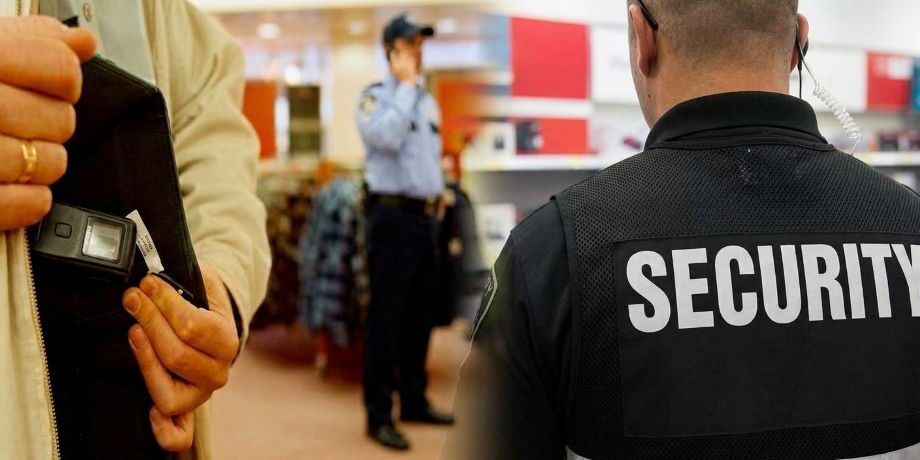
Shrinkage is one of the most damaging financial threats facing retail businesses in the United States, and trained security guards are one of the most proven tools for fighting it. Retail Security and Loss Prevention: How Guards Reduce Shrinkage is not just a policy discussion — it is a practical strategy that directly protects your bottom line, your staff, and your customers.
Table of Contents
What Shrinkage Actually Costs Retailers
The Four Main Sources of Retail Shrinkage
How Security Guards Reduce Shrinkage in Practice
Uniformed vs. Plainclothes Guards: Choosing the Right Approach
Technology and Guards Working Together
What to Look for When Hiring Retail Security Guards
Key Takeaways
- Shrinkage affects every retail format, from small boutiques to big-box stores, and the financial damage compounds over time.
- Shoplifting, employee theft, vendor fraud, and administrative error are the four primary drivers of inventory loss.
- Visible, trained security guards create a deterrence effect that reduces theft before it happens.
- Combining uniformed guards with plainclothes loss prevention personnel gives you layered coverage that is harder to exploit.
- Technology such as CCTV and EAS systems amplifies guard effectiveness but does not replace human judgment.
- Partnering with a professional security guard service like Instaguard Security Services gives your store trained personnel who understand retail-specific risks.
What Shrinkage Actually Costs Retailers
Shrinkage refers to the gap between the inventory you should have on paper and what actually remains on your shelves or in your stockroom. Every retailer deals with it to some degree, but the scale of the problem across the U.S. is significant. According to the National Retail Federation’s annual retail security survey, shrinkage costs the U.S. retail industry tens of billions of dollars per year, making it one of the industry’s most persistent profitability challenges.
For individual store operators, the impact is felt in tighter margins, higher prices passed on to consumers, and increased pressure on staff. A grocery store losing a fraction of a percent of revenue to shrinkage may not feel the burn immediately, but over a full fiscal year, that number adds up fast. A specialty retailer with high-ticket items can feel the pain from a single theft incident.
What makes shrinkage particularly frustrating is that much of it is preventable. The right staffing, the right policies, and the right physical presence on your sales floor can close the gap considerably.
The Four Main Sources of Retail Shrinkage
Understanding where shrinkage comes from is the first step toward controlling it. Retail loss prevention professionals generally organize the causes into four categories:
1. Shoplifting (External Theft) This is the category most people picture first. Shoplifting ranges from opportunistic grab-and-go incidents to organized retail crime (ORC) rings that systematically hit multiple locations. The Federal Bureau of Investigation has documented organized retail crime as a growing national concern, with coordinated groups targeting everything from pharmacies to electronics retailers.
2. Employee Theft (Internal Theft) Internal theft is often underestimated because it is harder to detect and prosecute. Employees may manipulate point-of-sale systems, process fraudulent returns, walk merchandise out through back entrances, or create fictitious voids. Because employees understand store procedures, their methods tend to be more sophisticated than those of external shoplifters.
3. Vendor or Supplier Fraud This category covers short-shipped deliveries, invoice manipulation, and product substitution. A vendor delivering 48 units when the invoice says 50 may seem minor, but across hundreds of deliveries per year, the cumulative loss is real.
4. Administrative and Process Errors Mislabeled products, pricing errors, miscounts during receiving, and inaccurate inventory records all contribute to shrinkage even when no theft is occurring. These errors erode accuracy and make it harder to identify where actual theft is happening.
Security guards directly address external and internal theft. They also create accountability structures that reduce the opportunity for administrative errors to go unnoticed.
How Security Guards Reduce Shrinkage in Practice
When people think about what a guard does, they often picture someone standing at a door. The reality is far more active. Retail security guards deployed by professional firms like Instaguard Security Services are trained to observe behavioral cues, manage deterrence through visibility, respond to incidents, and coordinate with store management on loss prevention reporting.
Here is how their presence translates into measurable loss reduction:
Deterrence Through Visibility A uniformed guard on the sales floor changes the calculus for anyone considering theft. Opportunistic shoplifters, who represent a large portion of retail theft incidents, are far less likely to act when they know a trained professional is present and watching. The deterrence effect does not require a confrontation — the uniform alone alters behavior.
Behavioral Observation Trained guards are taught to recognize pre-theft behavior: loitering near high-value merchandise, wearing baggy clothing in warm weather, repeated trips to fitting rooms with the same items, or coordinated distraction techniques used in ORC scenarios. Identifying these patterns before a theft occurs allows guards to intervene early or alert management.
Incident Response and Documentation When a theft does occur, guards are positioned to respond quickly and safely. They are trained in legal detention procedures, evidence documentation, and how to work with local law enforcement — which is critical for ensuring that cases can be prosecuted. Poor documentation is one of the most common reasons theft cases fall apart before reaching court.
Internal Theft Deterrence Guards also serve as a deterrent to employee theft. When staff know that exits are monitored, that bag checks are possible, and that a professional security presence is in the building, the temptation and opportunity to steal are both reduced.
Vendor and Delivery Monitoring Guards stationed at receiving docks can verify delivery counts, check credentials, and flag irregularities. This adds a layer of accountability that administrative staff alone often cannot provide during busy receiving periods.
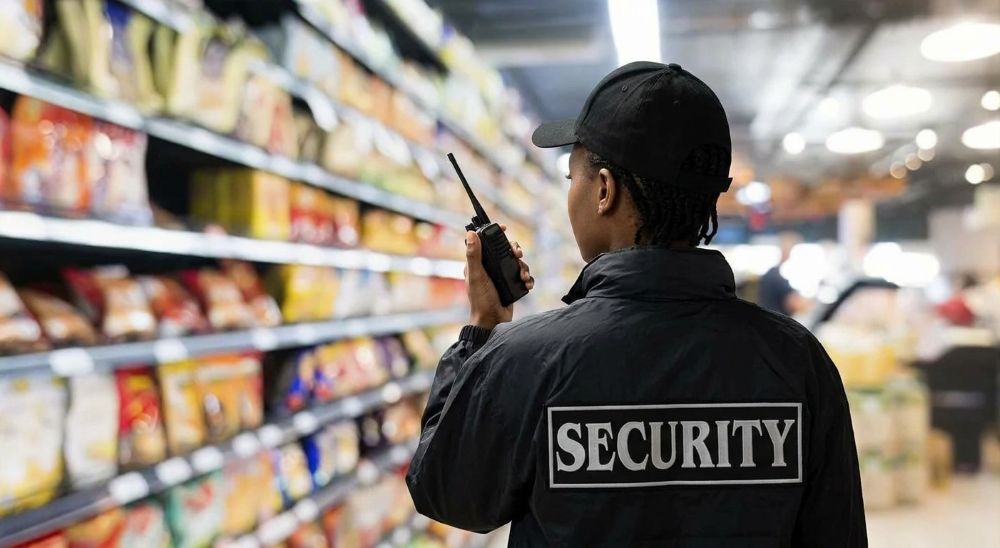
Uniformed vs. Plainclothes Guards: Choosing the Right Approach
One of the most practical decisions in retail security planning is whether to use uniformed guards, plainclothes loss prevention personnel, or both. Each approach has distinct advantages and trade-offs.
| Approach | Primary Benefit | Best For | Trade-off |
| Uniformed Guard | Deterrence, visible authority | High-traffic stores, entrances, high-theft zones | Less effective at catching sophisticated shoplifters |
| Plainclothes LP Officer | Observation, apprehension | Detecting ORC, internal theft monitoring | No deterrence effect; higher training requirements |
| Both (Layered) | Deterrence + detection | Large format retail, department stores | Higher staffing cost |
Uniformed guards work best when deterrence is the primary goal. Their presence signals to potential thieves that security is active. Plainclothes officers, on the other hand, can blend into the shopping environment and observe behavior without tipping off sophisticated shoplifters who have learned to avoid uniformed personnel.
For most mid-sized and large retailers, the most effective model is a layered approach: uniformed guards at key entry and exit points combined with plainclothes personnel on the floor. This combination covers both the deterrence gap and the detection gap.
Smaller retailers with tighter budgets often find that a single well-trained uniformed guard provides the highest return on investment per dollar spent, particularly if placed strategically near high-value merchandise or known theft hotspots.
Technology and Guards Working Together
Modern retail security rarely relies on human observation alone. Closed-circuit television (CCTV), electronic article surveillance (EAS) systems, point-of-sale exception reporting, and AI-assisted video analytics all contribute to a more comprehensive picture of what is happening in your store.
However, technology has critical limitations that only human guards can address:
- CCTV footage is only useful if someone is monitoring it in real time or if it is reviewed promptly after an incident.
- EAS tags trigger alarms, but without a guard present to respond, an alarm is just noise that shoplifters learn to ignore.
- AI-based video analytics can flag suspicious behavior but cannot make judgment calls, de-escalate confrontations, or conduct legal detentions.
The National Institute of Standards and Technology (NIST) has published frameworks for integrating physical and technological security systems, and the consensus across the industry is consistent: technology amplifies human capability but does not replace it.
For retail operators, the practical implication is clear. Investing in cameras and EAS systems without trained personnel to act on what those systems detect leaves a significant gap in your loss prevention posture. Guards bring the human judgment, physical presence, and legal authority to act that technology alone cannot provide.
What to Look for When Hiring Retail Security Guards
Not all security guard services are equal, and the difference matters enormously in a retail environment. Here is what you should evaluate before signing a contract:
Licensing and Compliance In the U.S., security guards are regulated at the state level. Requirements vary by state but typically include background checks, training certifications, and licensing through a state authority. In California, for example, the Bureau of Security and Investigative Services (BSIS) governs guard licensing. Confirm that any provider you consider is fully licensed and compliant in your state.
Retail-Specific Training General security training is not the same as retail loss prevention training. Look for guards who have been trained in shoplifting indicators, legal detention procedures (specifically the “merchant’s privilege” doctrine recognized in most U.S. states), de-escalation, and customer service — because a guard who alienates customers creates a different kind of problem for your business.
Experience with Your Store Format A guard experienced in protecting a big-box electronics retailer brings different knowledge than one who has worked primarily in office buildings. Ask providers about their experience with your specific retail category.
Reporting and Communication Protocols Professional security guard services provide incident reports, shift logs, and regular communication with store management. This documentation is essential for identifying patterns, adjusting deployment, and building legal cases when necessary.
Responsiveness and Flexibility Retail staffing needs change with seasons, sales events, and store hours. A security partner should be able to scale up during peak periods like the holiday shopping season and adjust coverage as your needs shift.
Instaguard Security Services provides retail security guards trained specifically for the demands of loss prevention in modern retail environments. Their team understands the behavioral cues, legal frameworks, and communication standards that effective retail security requires.
According to the Occupational Safety and Health Administration (OSHA), retail workers face significant safety risks, and having trained security personnel on site contributes not just to loss prevention but to overall workplace safety.
You can also review retail loss prevention best practices published by the Loss Prevention Foundation, the leading U.S. professional organization for the retail loss prevention industry.
Shrinkage will never reach zero, but with the right security infrastructure in place, you can bring it down to a level that protects your margins and your team. Retail Security and Loss Prevention: How Guards Reduce Shrinkage comes down to one core principle: a trained, professional guard presence changes behavior before theft ever occurs, while also equipping you to respond effectively when it does.
YOU MAY ALSO LIKE: How to Conduct a Security Risk Assessment for Your Business in 2026

Frequently Asked Questions
How much can security guards realistically reduce shrinkage in a retail store?
The reduction depends on store format, deployment strategy, and guard training, but the impact of a professional security presence is consistently significant across retail categories.
Visible, trained guards reduce opportunistic shoplifting by altering the behavior of potential thieves before any theft attempt occurs. When you add plainclothes loss prevention personnel to that mix, you also start catching more sophisticated actors. The key variable is consistency: a guard who is visibly engaged and following proper protocols produces far better results than one who is passive or poorly trained. Ask your security provider for incident reporting data from comparable retail environments to set realistic expectations for your specific store format.
What is the “merchant’s privilege” doctrine, and how does it affect what retail security guards can legally do?
The merchant’s privilege is a legal doctrine recognized in most U.S. states that allows retail employees and security personnel to temporarily detain a suspected shoplifter under specific conditions.
Those conditions typically require that the guard has reasonable grounds to believe a theft occurred, that the detention is conducted in a reasonable manner, and that it lasts only as long as necessary to conduct a limited investigation or await law enforcement. The specifics vary by state, so it is critical that your security guards are trained on the laws governing detention in your particular state. Improper detention can expose your business to civil liability, which is one reason retail-specific training is non-negotiable when selecting a security guard service.
Should small retailers invest in security guards, or is technology like CCTV enough?
For most small retailers, a combination of basic technology and at least part-time security guard coverage offers better protection than technology alone.
CCTV cameras and EAS tags are effective deterrents, but they depend on someone acting on the information they generate. A camera that records a theft but triggers no real-time response does not prevent the loss — it only documents it after the fact. A trained guard, even on a part-time or scheduled basis during peak hours, closes that response gap. Many small retailers find that concentrating guard coverage during high-traffic periods like weekends, evenings, and sale events delivers the strongest return for the cost.
How do retail security guards handle organized retail crime (ORC) differently from individual shoplifters?
Organized retail crime requires a coordinated response that goes beyond standard shoplifting protocols, including real-time communication, documentation, and law enforcement coordination.
ORC groups often use distraction techniques, multiple actors working simultaneously, and pre-planned exit strategies. Trained guards dealing with ORC threats are taught to prioritize documentation and observation over immediate physical confrontation, because ORC participants may be more aggressive and the legal cases against them require strong evidentiary support. Guards should be radioing store management, capturing descriptions, and working directly with local law enforcement. Instaguard Security Services trains its retail security guards to recognize ORC behavioral patterns and follow protocols that support successful prosecution rather than creating confrontations that could put staff or customers at risk.
How do I know if my current security guard service is actually reducing shrinkage, or just adding a cost?
The clearest indicators are incident reports, inventory shrinkage trends over time, and whether your provider is actively communicating findings and adjusting deployment based on data.
A professional security guard service should provide you with regular incident logs, shift reports, and observations from the floor. If your provider cannot produce structured reporting, that is a red flag. On the inventory side, compare your shrinkage figures before and after deploying guards, and break the data down by category if possible to identify where losses are still occurring. If shrinkage is flat or rising despite a security presence, the issue may be guard placement, training quality, or gaps in coverage during specific hours. A good security partner will work with you to diagnose and solve that problem rather than simply continuing to fill a shift.
The Bottom Line on Retail Security and Loss Prevention: How Guards Reduce Shrinkage
Every dollar lost to shrinkage is a dollar that does not reach your bottom line, your employees, or your ability to reinvest in your business. The evidence is consistent across retail formats: a trained, professional security presence reduces opportunistic theft, deters internal misconduct, improves incident documentation, and creates the kind of accountability that technology systems alone simply cannot deliver. Retail Security and Loss Prevention: How Guards Reduce Shrinkage is ultimately about making your store a harder, less attractive target while ensuring that when losses do occur, you have the documentation and response protocols to act on them decisively.
If you are ready to reduce shrinkage and protect your store’s profitability, the next step is straightforward. Contact Instaguard Security Services to discuss your store format, your current loss prevention gaps, and how their retail security guards can be deployed to close them. A professional assessment of your specific location and risk profile is the most direct path to building a security strategy that actually works.
READ MORE: Wildfire Season Security: Protecting Vacant and Evacuated Properties in LA
This content is for informational purposes only and is not legal, insurance, or compliance advice. California security licensing requirements and regulations may change. For a tailored security assessment or to confirm current service options, contact Instaguard Security at (800) 786-0698 or visit instaguardinc.com.