

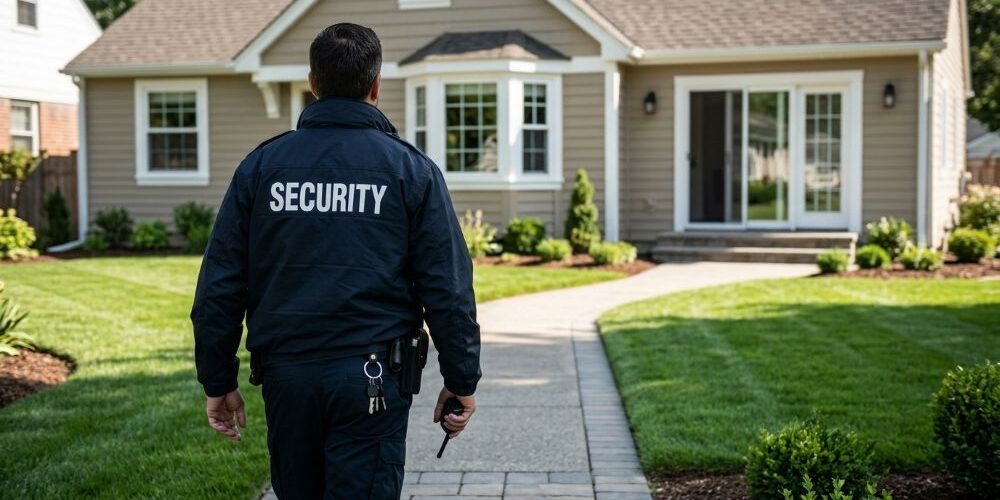
Empty buildings attract problems fast. Vacant property security is the practice of deploying physical barriers, monitoring systems, and on-site personnel to deter vandalism, unauthorized occupation, and theft before they escalate into costly legal and structural crises.
Property owners who leave buildings unguarded for even a few weeks routinely face broken windows, copper theft, graffiti, and squatters who establish legal residency claims under adverse possession statutes that vary by state. The financial exposure is real and compounds quickly.
Who this is for: This article is written for property owners, real estate investors, estate administrators, and facility managers who are responsible for a building that sits unoccupied for 30 days or more. Not for: Homeowners looking for basic residential alarm systems or renters trying to secure a leased apartment unit.
Key Takeaways
- Squatters can begin establishing legal residency claims in as little as 30 days in some U.S. states, making early security intervention critical.
- Physical deterrents (steel door blockers, window boards) slow entry but do not replace active monitoring or human presence.
- Security guard patrols from a licensed provider like Instaguard Security Services reduce incident response time and create documented evidence trails.
- Surveillance cameras alone have a meaningful deterrence effect, but they do not stop a determined intruder in real time.
- Insurance carriers often require proof of active security measures on vacant properties to maintain coverage, so documentation matters.
- Combining layered deterrents, remote monitoring, and scheduled patrols gives you the strongest risk profile at a manageable cost.
Why Vacant Buildings Become Targets So Quickly
A building that looks unoccupied sends a specific signal to opportunists. Overgrown landscaping, dark windows, uncollected mail, and no visible activity all function as open invitations. The pattern is almost mechanical: initial vandalism lowers the perceived risk for the next actor, which accelerates deterioration in a cycle criminologists call the broken windows effect.
Copper thieves are particularly aggressive. They strip HVAC systems, electrical conduit, and plumbing within days of a property going dark. A single targeted theft can cause $20,000 to $50,000 in structural damage, far beyond the value of the metal removed. The catch is that most property insurance policies include vacancy clauses that reduce or void coverage after 30 to 60 consecutive days of emptiness, depending on the policy and carrier.
Squatters present a different category of risk. In states like California, Texas, and New York, adverse possession law requires continuous occupation for a statutory period, but the immediate problem is eviction. Removing an unauthorized occupant from a property they have moved into requires a formal unlawful detainer proceeding in most jurisdictions, a process that can take 30 to 90 days and cost several thousand dollars in legal fees even when you win.
The National Fire Protection Association reports that vacant structures account for a disproportionate share of structural fires, many of them set intentionally. That risk alone justifies treating an empty building as a liability that needs active management, not a passive asset waiting for sale or redevelopment.
Physical Hardening: The First Line of Defense
Before any monitoring system or guard service is effective, the building itself needs to resist casual entry. Physical hardening is not glamorous, but it buys time.
Steel door blockers, often called door barricade bars, reinforce entry points that would otherwise yield to a single kick. Heavy-gauge window boards (at least 5/8-inch plywood or steel sheets for ground-floor openings) make glass entry points impractical without noisy, time-consuming effort. For commercial properties, installing temporary steel security screens rather than plywood signals active management and is more resistant to fire.
Perimeter fencing with locked access gates adds another friction layer. Chain-link alone is inadequate. Combine it with razor or anti-climb topping, and add visible padlocks on all gates. Lighting is underused as a deterrent. Motion-activated LED floods on all corners and entry points cost relatively little to install and operate, and in practice, opportunistic vandals almost always move to a darker, easier target.
What usually trips people up here is assuming one measure covers the rest. A hardened door means nothing if a ground-floor window is unboarded. Treat every possible entry point as a potential target before spending money on surveillance.
| Security Hardening Measure | Approximate Cost (USD) | Best For | Key Limitation |
| Steel door barricade bars | $150 to $400 per door | All vacant buildings | Does not address windows or skylights |
| 5/8-inch plywood window boards | $30 to $80 per window | Short-term vacancy (under 90 days) | Signals neglect, flammable material |
| Steel security screens (windows) | $200 to $600 per window | Long-term or high-value properties | Higher upfront cost |
| Motion-activated LED flood lights | $80 to $250 per unit | All vacant buildings | Requires working electrical supply |
| Anti-climb perimeter fencing topping | $5 to $15 per linear foot | Commercial and industrial sites | Local code restrictions may apply |
Remote Monitoring and Surveillance Technology
Cameras are not a substitute for physical security, but they serve two functions nothing else replaces: real-time detection and post-incident documentation.
For vacant properties without a reliable power supply, solar-powered 4G LTE cameras have become practical. Units from manufacturers like Reolink and Axis Communications offer live-view access, motion-triggered alerts, and cloud storage without requiring a hardwired connection. The trade-off is that cellular-connected cameras depend on carrier signal strength, which can be unreliable in rural or semi-rural properties.
Remote video monitoring services take surveillance a step further. A central monitoring station receives live feeds and can broadcast a verbal warning when motion is detected after hours, a feature that has shown strong deterrence for trespassing in documented deployments. Instaguard Security Services coordinates with remote monitoring partners to create a response loop: when a camera triggers an alert, a local patrol can be dispatched within minutes rather than waiting for a police unit with competing priorities.
The honest limitation of camera-only solutions is that they document crime rather than stop it. A motivated copper thief or squatter who has scouted a property knows roughly where cameras are and how long the response window is. This is why monitoring technology works best as one layer in a broader system, not as the primary defense.

Manned Security Patrols: What They Add That Technology Cannot
A uniformed guard presence changes the risk calculation for anyone considering unauthorized entry. Camera footage is evidence after the fact. A guard on-site or on a scheduled patrol circuit is a real-time deterrent and a first responder.
Instaguard Security Services provides licensed security guard personnel trained specifically for vacant and unoccupied property assignments. The value is not just presence. Guards conduct physical inspections, document the condition of the property on each visit, check that physical hardening measures remain intact, and generate written incident reports that create a paper trail useful for insurance claims and any subsequent eviction proceedings.
Patrol frequency matters. A property checked once every 72 hours gives a 3-day window for a squatter to establish a foothold. Weekly patrols are insufficient for high-risk urban locations. In practice, the properties that see the worst outcomes are those where owners schedule minimal patrols to cut costs and then face a $15,000 to $40,000 remediation bill after a squatter group damages the interior.
The cost of regular patrols from a licensed provider is typically far lower than one eviction proceeding plus structural repairs. That trade-off is worth spelling out clearly.
| Patrol Frequency | Approximate Monthly Cost (USD) | Recommended For | Trade-off |
| Daily drive-by patrol | $800 to $1,500 | High-crime urban locations, properties with prior incidents | Higher cost, but maximum deterrence |
| Every-other-day patrol | $500 to $900 | Mid-risk suburban commercial properties | Leaves 48-hour windows between visits |
| Twice-weekly patrol | $300 to $600 | Lower-risk rural or low-traffic areas | Adequate for low-threat environments only |
| Weekly patrol | $150 to $300 | Very low-risk locations only | Not sufficient for most urban properties |
Legal Steps That Reinforce Physical Security
Physical deterrents and monitoring need legal backing to be fully effective. Posting clearly visible “No Trespassing” signs on every access point is not just a common-sense measure. In most U.S. states, it is a legal prerequisite for trespassing charges to apply. Without posted notice, unauthorized entry may be treated as a civil rather than criminal matter, which weakens your enforcement options significantly.
Register your vacant property with your local municipality if your jurisdiction requires it. Many U.S. cities maintain vacant property registries under housing codes, and non-compliance can result in fines. The U.S. Department of Housing and Urban Development provides resources on local code compliance for property owners navigating multi-jurisdiction requirements.
Work with a real estate attorney to understand your state’s specific adverse possession threshold. In Texas, for example, the statutory period for adverse possession without color of title is 10 years under Texas Civil Practice & Remedies Code Section 16.026, but interim occupation still creates legal complications that require court action to resolve. In California, the period is 5 years. Knowing your state’s rules helps you calibrate how urgently you need to act when unauthorized entry is detected.
Notify your insurance carrier in writing the moment a property becomes vacant. Many commercial property policies include vacancy clauses that modify or suspend coverage after 60 days. Providing documentation of your active security measures, guard patrol logs from Instaguard Security Services, camera installation records, and physical hardening receipts, can be the difference between a paid claim and a denied one.
Building a Layered Security Plan for Your Vacant Property
The properties that avoid serious incidents are almost never the ones with one strong security measure. They are the ones where multiple layers make unauthorized entry slow, noisy, visible, and likely to trigger a response.
A practical layered approach looks like this:
- Physical hardening first: Steel-reinforced entry points, window boards or screens, and motion-activated perimeter lighting before anything else.
- Surveillance to monitor and document: Solar-powered cameras with remote monitoring and motion alerts, positioned to cover all entry points and the perimeter.
- Scheduled patrols for real-time deterrence: Licensed guard patrols from a provider like Instaguard Security Services on a frequency appropriate to your property’s risk level and location.
- Legal signage and registration: No-trespassing signs posted at all access points, property registered with local authorities where required.
- Insurance documentation: Maintain a file of all security measures, patrol logs, and incident reports to protect your coverage.
The Cybersecurity and Infrastructure Security Agency (CISA) publishes physical security guidance that applies to commercial and institutional facilities, including vacant buildings, and is a useful reference when building a formal security plan for a high-value asset.
The pattern that keeps appearing with properties that suffer serious damage: owners treat vacant property security as a temporary inconvenience rather than an ongoing operational responsibility. An empty building is not a paused asset. It is an active liability, and managing it that way from day one is what separates a clean handoff, whether that is a sale, lease, or redevelopment, from a remediation project.
YOU MAY ALSO LIKE: Catalytic Converter Theft Is Rising: Parking Lot Security Strategies That Actually Work

Frequently Asked Questions
How quickly can squatters establish legal rights in a vacant property?
The timeline varies by state, but unauthorized occupants can create serious legal complications within days of entry, well before any adverse possession clock matters.
In states like California, adverse possession requires 5 years of continuous occupation, while Texas requires 10 years. The immediate problem is not adverse possession. It is the eviction process itself, which requires a formal unlawful detainer filing even if the person has been on the property for just a week. That proceeding can take 30 to 90 days and cost $3,000 to $8,000 in legal fees. Acting within the first 24 to 48 hours of detecting unauthorized occupation, before the occupant has time to bring in belongings and establish a routine, is almost always cheaper and faster than waiting to pursue formal eviction.
Does a vacant property need a different type of security insurance than an occupied building?
Yes. Most standard commercial property policies include a vacancy clause that modifies or suspends coverage after 30 to 60 consecutive days of emptiness, depending on your carrier and policy terms.
Once that threshold is crossed, covered perils are often reduced significantly. Fire, vandalism, and water damage coverage are the categories most commonly restricted. You should notify your insurer in writing as soon as a property becomes vacant and ask specifically about vacancy endorsements, which are add-on provisions that restore broader coverage for an additional premium. Providing documented proof of active security measures, including guard patrol logs and camera installation records, strengthens your position when negotiating endorsement terms or filing a claim.
Are security cameras alone enough to protect a vacant building?
No. Cameras document incidents and provide deterrence, but they do not physically stop entry or respond in real time without a connected monitoring service and a dispatch protocol.
A camera that records a copper theft at 2 a.m. gives you footage for a police report. It does not recover the stolen material or prevent the $30,000 in structural damage caused during the theft. The pattern seen repeatedly across vacant commercial properties is that camera-only deployments work well against casual vandalism but fail against anyone who has scouted the property and understands the response window. Pairing cameras with a remote monitoring service that can issue verbal warnings and dispatch a patrol, like the coordination model used by Instaguard Security Services, closes that gap significantly.
What should I post on a vacant property to legally protect it from trespassers?
At minimum, post clearly visible “No Trespassing” signs at every access point, including gates, doors, and any gap in perimeter fencing where entry is possible.
Most U.S. states require conspicuous notice for trespassing to be treated as a criminal offense rather than a civil matter. Signs should include the property owner’s name or the name of the authorized security provider, and in some states, a contact phone number. Check your local ordinances, because some municipalities specify minimum sign dimensions and required language. Beyond signage, register the property with your local vacant property registry if your city or county maintains one. Failure to register can result in code violation fines that compound separately from any trespassing or damage issues.
How often should a security guard patrol a vacant property?
Patrol frequency should match your property’s risk level: daily for high-crime urban locations, every other day for mid-risk suburban sites, and twice weekly at minimum for lower-risk rural properties.
Weekly patrols are generally insufficient for any property in an area with documented theft or vandalism activity. What typically determines the right frequency is a combination of location crime data, the property’s visible appeal to thieves (copper, HVAC equipment, scrap metal), and how long the property will remain vacant. A building sitting empty for 6 months in a dense urban corridor needs a fundamentally different patrol schedule than a suburban office suite vacant for 45 days while awaiting a new tenant. Instaguard Security Services can assess your specific property and recommend a patrol cadence that balances coverage with cost, and every patrol visit generates a written log that serves as documentation for insurance and legal purposes.
The Bottom Line on Vacant Property Security
Vacant property security is not a one-time setup task. It is an ongoing operational discipline that requires physical hardening, active surveillance, scheduled human presence, and legal documentation working together. Any single layer handled in isolation leaves a gap that motivated opportunists will find and exploit, often within days of a building going dark.
The properties that come through extended vacancy periods with minimal damage share a common trait: their owners treated the empty building as a liability requiring active management from day one, not a passive asset waiting for the next transaction. That mindset shift, from “it’s just sitting there” to “it needs protection right now,” is what separates a clean outcome from a remediation bill that wipes out months of holding costs.
If your property is vacant now or heading toward vacancy, start with a site assessment. Contact Instaguard Security Services to evaluate your building’s specific vulnerabilities, determine the right patrol frequency, and build a layered security plan that keeps your insurance coverage intact and unauthorized occupants out from the start.
READ MORE: HOA Security Guide: Do Gated Communities Need Security Patrols?
This content is for informational purposes only and is not legal, insurance, or compliance advice. California security licensing requirements and regulations may change. For a tailored security assessment or to confirm current service options, contact Instaguard Security at (800) 786-0698 or visit instaguardinc.com.