

When your business faces a sudden security gap, a one-time event, or a short-term project requiring on-site protection, temporary security guard services give you trained, professional coverage without a long-term contract commitment. Knowing when to call a provider like Instaguard Security Services and exactly what to ask for will save you time, money, and unnecessary risk.
Table of Contents
Why Short-Term Security Needs Are More Common Than You Think
The Most Common Situations That Require Temporary Guards
What to Look for in a Short-Term Security Provider
How the Hiring Process Actually Works
Comparing Short-Term Security Options
Costs and What Affects Your Rate
How to Get the Most Out of Your Temporary Guards
Key Takeaways
- Temporary security guard services are ideal for events, seasonal gaps, construction sites, and emergency coverage situations.
- Reputable providers like Instaguard Security Services can deploy trained guards quickly, often within 24 to 48 hours.
- Always verify that your short-term security provider holds valid state licensing, liability insurance, and workers’ compensation coverage.
- Define your scope clearly before hiring: location, hours, number of guards, and any specific duties required.
- Short-term contracts offer flexibility, but pricing per hour is typically higher than long-term arrangements.
- Briefing your temporary guards thoroughly on-site protocols before their shift starts significantly improves outcomes.
Why Short-Term Security Needs Are More Common Than You Think
Security threats do not follow a predictable schedule, and neither do the circumstances that create vulnerability for your business or property. A retail store may need extra coverage during the holiday shopping season. A tech startup moving into a new office may need monitored access control during the transition week. A property manager may lose their regular security vendor with almost no notice.
These are not edge cases. They are everyday realities that businesses across the United States face regularly. The Bureau of Justice Statistics tracks property crime rates that consistently show spikes tied to seasonal patterns, economic shifts, and local events. When your normal security posture is disrupted, even briefly, the exposure can be meaningful.
Short-term security services have grown significantly as a category precisely because the business world is dynamic. Staffing changes, facility transitions, construction phases, and public gatherings all create predictable windows of elevated risk. Having a trusted provider on call means you are not scrambling at the last minute and settling for unvetted personnel.
The Most Common Situations That Require Temporary Guards
Understanding where short-term security fits helps you plan proactively rather than reactively. Below are the scenarios where businesses most frequently turn to providers like Instaguard Security Services for temporary coverage.
Corporate and Private Events Galas, product launches, conferences, and private parties all involve crowds, valuables, and controlled access. A single-day or weekend event does not justify a long-term contract, but it absolutely justifies professional security. Guards can manage entry points, monitor parking areas, provide crowd control, and respond to disturbances.
Construction Sites are frequent targets for equipment theft and material loss, particularly after hours. Temporary guards protect costly machinery, raw materials, and the site perimeter during active build phases. When the project ends, so does the contract.
Retail During Peak Seasons Black Friday, back-to-school periods, and holiday shopping windows create surge conditions that standard staffing levels cannot always handle safely. Adding temporary guards during these peaks deters shoplifting, manages crowd flow, and gives permanent staff backup.
Emergency Gap Coverage If a regular security vendor suddenly cancels, a key guard is unexpectedly unavailable, or a new threat assessment requires immediate additional presence, short-term guards fill that gap fast.
Vacant Property and Real Estate Transitions Between tenants, during renovations, or during an ownership transition, properties are more vulnerable to vandalism, trespassing, and theft. Temporary on-site security maintains the integrity of the property until full occupancy resumes.
Film and Production Shoots Location shoots require perimeter security to protect equipment, manage unauthorized access, and keep production running without interruption. These engagements are project-based by nature.
What to Look for in a Short-Term Security Provider
Not all security firms are equipped to handle rapid deployment and short-duration engagements professionally. Here is what separates a reliable provider from one that will leave you with problems.
State Licensing Every legitimate security company operating in the United States must hold a valid state-issued license. In most states, individual guards must also carry a guard card or equivalent certification. California, for example, requires guards to be licensed through the Bureau of Security and Investigative Services. Confirm the provider’s credentials before signing anything.
Insurance Coverage You need to see proof of general liability insurance and workers’ compensation coverage. If a guard is injured on your property, or if an incident occurs involving a third party, you need the provider’s insurance to respond first. Do not assume it exists. Ask for a certificate.
Background Screening Standards Ask specifically what background check process the company runs on its guards. The Equal Employment Opportunity Commission provides federal guidelines on criminal history screening in hiring, but individual companies vary widely in how thoroughly they vet personnel.
Response Time and Availability For short-term engagements, deployment speed matters. A quality provider should be able to confirm availability, finalize a scope of work, and have personnel on-site within 24 to 48 hours in most cases.
Experience in Your Industry or Setting A guard suitable for a corporate lobby walkthrough is not necessarily the right fit for a high-crowd outdoor festival. Ask whether the provider has specific experience matching your scenario.
How the Hiring Process Actually Works
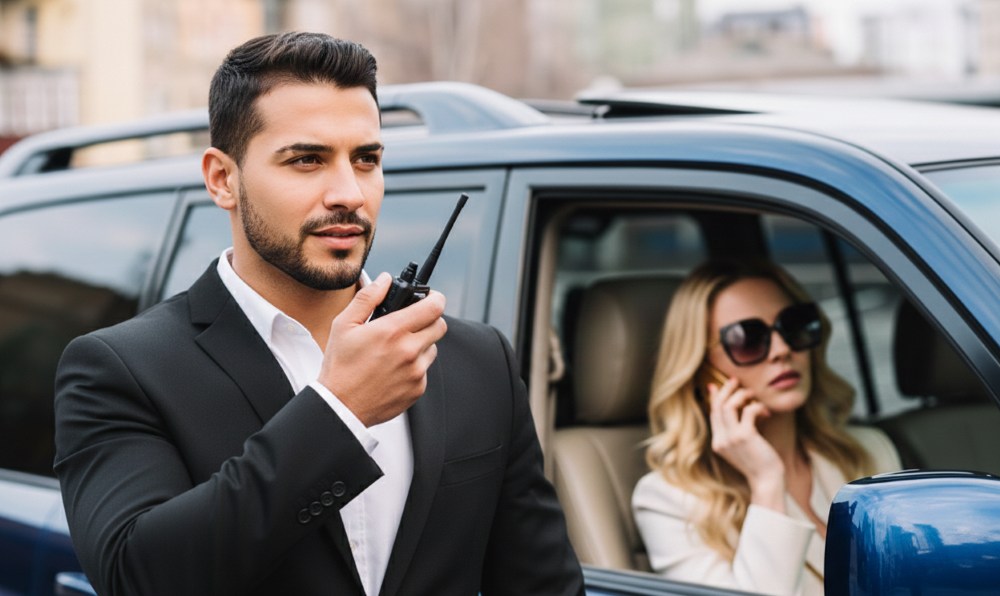
If you have never hired short-term security before, the process may seem more complicated than it actually is. Here is a straightforward breakdown of what to expect when working with a provider like Instaguard Security Services.
Step 1: Define Your Scope Before you contact any provider, write down the basics: location, start date, duration, approximate hours per day, number of guards needed, and any specific duties (armed or unarmed, foot patrol, access control, etc.).
Step 2: Request a Consultation or Quote Most reputable security companies offer a free consultation. Use this conversation to present your scope, ask about their licensing, and get a clear rate breakdown. Be direct about your timeline.
Step 3: Review the Contract Even for a one-day engagement, get the terms in writing. Confirm what happens if you need to extend the engagement, what the cancellation policy is, and who is your point of contact if issues arise during the shift.
Step 4: Conduct a Site Walkthrough If possible, walk the assigned guard or a supervisor through the site before the engagement begins. Identify access points, areas of concern, emergency exits, and your chain of command for escalations.
Step 5: Brief Your Team Your internal staff should know who the temporary guards are, what their authority is, and how to communicate with them. Confusion between your employees and on-site security can undermine the entire arrangement.
Step 6: Debrief After the Engagement After the coverage period ends, ask for an incident report summary. Even if nothing notable occurred, reviewing what guards observed helps you evaluate the provider and plan for future needs.
Comparing Short-Term Security Options
Choosing the right type of temporary security coverage depends on your environment, threat level, and budget.
| Coverage Type | Best For | Typical Shift Length | Armed Option |
| Unarmed foot patrol | Retail, offices, events | 4-12 hours | No |
| Armed guard post | High-value assets, cash handling | 8-12 hours | Yes |
| Mobile patrol | Large properties, construction | Varies | Yes/No |
| Access control post | Corporate entry points, events | 4-8 hours | No |
| Overnight stationary | Vacant buildings, construction | 8-10 hours | Optional |
Armed versus unarmed is one of the most significant decisions you will make. Armed guards are required in certain settings, such as financial institutions, high-value jewelry events, or locations with prior incidents of violent crime. However, armed guards carry higher liability implications and cost more per hour. For most events and standard commercial settings, trained unarmed guards are sufficient and appropriate.
The Bureau of Labor Statistics provides an occupational overview of security guard roles in the United States, which can help you understand the range of duties and qualifications that distinguish guard types.
Costs and What Affects Your Rate
Pricing for short-term security services in the United States varies based on several factors. Understanding these variables helps you build a realistic budget and avoid surprises.
Key factors that influence your rate:
- Geographic location: Labor costs in major metropolitan areas like New York, Los Angeles, or Chicago are higher than in smaller markets.
- Armed vs. unarmed: Armed guards command a meaningfully higher hourly rate due to additional training, licensing, and liability.
- Notice period: Last-minute requests typically carry a premium. Booking with at least a week of lead time usually brings the rate down.
- Shift duration: Very short shifts (under four hours) often carry minimum billing requirements. Longer shifts may include overtime cost considerations.
- Number of guards: Larger deployments can sometimes be negotiated at a volume rate, particularly for multi-day events.
- Specialized duties: Guards required to manage electronic surveillance systems, operate access control software, or provide executive protection typically bill at a higher rate than standard patrol duties.
For budgeting purposes, contacting Instaguard Security Services directly for a site-specific quote is always the most accurate approach, as regional market conditions and engagement specifics drive significant variation.
The U.S. Small Business Administration offers guidance on budgeting for operational security expenses as part of broader business continuity planning, which can be useful context if you are building a security line item for the first time.
How to Get the Most Out of Your Temporary Guards
Hiring is only half the equation. Getting genuine value from your short-term security arrangement depends on how well you prepare and communicate.
Provide a written post order. A post order is a set of written instructions that outlines the guard’s duties, schedule, authority level, reporting chain, and emergency procedures. Even a one-page document covering these basics dramatically improves guard performance.
Designate a single internal point of contact. Your temporary guards should know exactly who to go to with questions, issues, or escalations. Mixed signals from multiple contacts create confusion and delay.
Walk the site together. Do not assume your guards know the layout, even if they have worked similar sites before. A 15-minute walkthrough pays dividends throughout the engagement.
Set clear communication expectations. Establish how guards will report during their shift, whether that is a check-in call, a written log, or a digital app. Define what warrants an immediate call versus a post-shift report.
Treat them as part of your team, temporarily. Guards who feel respected and informed perform better. Brief them on the purpose of the event or project, any VIPs or high-priority areas, and what a successful shift looks like from your perspective.
Short-term security services require the same level of diligence in selection and setup as a long-term arrangement. The engagement may be brief, but the risks being managed are real. Whether you are protecting an asset, a crowd, or a property, the temporary guards representing Instaguard Security Services on your site are accountable to the same professional standards as any permanent security team.
READ MORE: Security Guards vs. Cameras: Which Protects Your Property Better?
Frequently Asked Questions
Q: How quickly can temporary security guards be deployed to my location?
Most reputable providers can deploy temporary security guards within 24 to 48 hours of a confirmed booking.
The exact timeline depends on the size of your request, your geographic location, and whether you need armed or unarmed coverage. For large-scale deployments involving multiple guards across several shifts, plan for a slightly longer lead time to allow for proper scheduling and site briefing. Giving your provider at least one week of advance notice whenever possible will result in better-matched personnel and more competitive pricing.
Q: Do I need a contract for a one-day security engagement?
Yes, you should always get the terms of any security engagement in writing, even for a single-day assignment.
A written agreement protects both parties by clearly defining the scope of work, hours, guard count, rate, cancellation policy, and liability responsibilities. Without a written scope, disputes over billing or coverage gaps become difficult to resolve. Most professional security companies, including Instaguard Security Services, provide straightforward service agreements for short-term engagements that can be reviewed and signed quickly without a lengthy procurement process.
Q: What is the difference between armed and unarmed temporary guards?
Armed guards carry a licensed firearm and are appropriate for high-risk settings, while unarmed guards rely on presence, observation, and de-escalation techniques.
For most commercial events, retail environments, and office transitions, trained unarmed guards provide sufficient deterrence and response capability. Armed guards are typically required when protecting high-value assets, cash-handling operations, or locations with documented histories of violent incidents. Armed guards must meet additional state licensing requirements and carry higher liability considerations, which is reflected in their hourly rate. According to the Bureau of Security and Investigative Services, armed guards in states like California must complete specific firearms training and qualify for an additional license endorsement beyond the standard guard card.
Q: How do I verify that a short-term security company is properly licensed?
Ask the provider for their state-issued business license number and request copies of individual guard credentials before the engagement begins.
You can verify security company licenses through your state’s licensing authority, which is typically the Department of Consumer Affairs or a similar regulatory body. The National Association of Security Companies (NASCO) also provides resources on industry standards and can help you identify vetted member firms. Always ask for proof of general liability insurance and workers’ compensation coverage in addition to licensing documentation. A legitimate provider will have no hesitation providing all of these documents upfront.
Q: Can temporary security guards handle crowd control at large outdoor events?
Yes, trained temporary security guards are regularly deployed for large outdoor events and are capable of managing crowd flow, access points, and disturbances.
Effective crowd control at large events requires advance planning, clear post assignments, and guards with experience in high-density environments. Share your event layout, expected attendance, entry and exit configurations, and any VIP or restricted areas with your provider well before the event date. The Department of Homeland Security’s crowd management resources offer federal guidance on event safety planning that can complement your on-site security arrangement. For very large events, your provider may recommend a security supervisor on-site to coordinate guard teams in real time.
The Bottom Line on Temporary Security Guard Services: When and How to Hire Short-Term Guards
Knowing when your situation calls for short-term security coverage and how to source it correctly is one of the most practical things you can do to protect your people, property, and assets. Whether you are managing a single-evening event, bridging a staffing gap, or securing a construction site through its active phase, the right temporary security guard services provider makes the difference between a professionally managed engagement and an avoidable liability.
Instaguard Security Services is positioned to provide that professional coverage with the speed, accountability, and trained personnel that short-term situations demand. Start by defining your scope clearly, verifying your provider’s credentials, and committing to a thorough site briefing before the first shift begins. Contact Instaguard Security Services today to get a quote tailored to your specific location, timeline, and coverage needs.
READ MORE: California Guard Card Requirements: BSIS Licensing Explained for Aspiring Security Professionals
This content is for informational purposes only and is not legal, insurance, or compliance advice. California security licensing requirements and regulations may change. For a tailored security assessment or to confirm current service options, contact Instaguard Security at (800) 786-0698 or visit instaguardinc.com.