

Table of Contents
Why Parking Lot Security Matters More Than Many Property Owners Realize
The Most Effective Components of a Strong Parking Lot Security Plan
How to Improve Parking Lot Security: Step-by-Step Checklist
Parking Lot Security Best Practices by Property Type
Common Parking Lot Security Mistakes to Avoid
FAQ: Parking Lot Security Questions Property Owners Ask
Strengthen Your Parking Lot Security Before Problems Occur
Key Takeaways
- Parking lot security protects people, vehicles, property, and business reputation.
- The strongest plans combine lighting, cameras, access control, patrols, and response procedures.
- Poor lighting, blind spots, and weak maintenance increase security risks.
- CPTED principles help make parking lots safer through visibility and smart design.
- Security should be reviewed regularly, not only after an incident.
Parking lots are often the first and last place people interact with a property, which makes safety a business priority. Effective parking lot security protects customers, employees, tenants, vehicles, and the property itself.
The need is real: the Federal Bureau of Investigation (FBI) reported more than 14 million criminal offenses in 2024, and property crime includes burglary, larceny-theft, motor vehicle theft, and arson. The National Insurance Crime Bureau (NICB) also reported that vehicle theft remained a major concern, even though thefts declined 17% in 2024.
What Is Parking Lot Security?
Parking lot security refers to the systems, procedures, personnel, and design choices used to reduce crime and improve safety in parking areas.
A strong security parking lot plan may include:
- Surveillance cameras
- Lighting
- Access control
- Security patrols
- Emergency response procedures
- Clear signage
- Crime Prevention Through Environmental Design, or CPTED
The goal is not just to record incidents. The goal is to deter problems, improve visibility, guide safe movement, and create a faster response when something happens.
Why Parking Lot Security Matters More Than Many Property Owners Realize
Parking areas are open, high-traffic spaces. They often have multiple access points, parked vehicles, blind spots, and periods of low activity. These conditions can increase risks if the property is poorly monitored or poorly maintained.
Crime Risks in Parking Areas
Common parking lot risks include:
- Vehicle break-ins
- Motor vehicle theft
- Catalytic converter theft
- Vandalism
- Robbery
- Assault
- Loitering
- Trespassing
- Illegal dumping
The Department of Justice has long identified parking facilities as high-risk environments for certain crimes. A DOJ CPTED publication noted that more than 500,000 violent crimes occurred in parking facilities in 1992, based on National Crime Victimization Survey data.
Liability and Premises Safety Concerns
Poor security can also create liability exposure. Inadequate lighting, broken cameras, unclear pedestrian routes, and ignored incident patterns may all contribute to preventable harm.
Occupational Safety and Health Administration’s (OSHA) role is to assure safe and healthful working conditions through standards, training, outreach, and enforcement. For employers, that means parking areas used by employees should be treated as part of the broader safety environment.
Reputation and Customer Trust
A parking lot that feels unsafe affects how people perceive the entire property. Tenants may complain. Employees may feel uncomfortable leaving after dark. Customers may avoid returning. In commercial settings, safety is part of the customer experience.
The Most Effective Components of a Strong Parking Lot Security Plan
Good parking lot security is layered. Cameras alone are useful, but they are not enough.
Security Cameras and Video Surveillance
Cameras help document incidents, support investigations, and deter visible misconduct. For better coverage, place cameras near:
- Entrances and exits
- Payment stations
- Walkways
- Loading areas
- Stairwells
- Elevators
- Remote parking zones
Property owners should avoid relying on cameras that only capture wide, unclear footage. Camera placement should support identification, license plate visibility, and blind spot reduction.
Proper Lighting Improves Safety and Visibility
Lighting is one of the most important security parking lot upgrades. It improves visibility for pedestrians, drivers, cameras, and security personnel.
The Illuminating Engineering Society includes roadway and parking facilities in its lighting standards, including ANSI/IES RP-8-22. Older IES guidance for outdoor parking areas referenced average maintained horizontal illuminance and stronger lighting at entrances and exits.
Focus on even coverage, not just brightness. Dark pockets between fixtures can create avoidable risk.
Access Control Measures
Access control is useful when parking areas need restricted entry. Examples include:
- Gates
- Key cards
- Mobile credentials
- Visitor passes
- Time-based entry rules
- Controlled employee parking zones
Access control is especially relevant for apartment communities, warehouses, medical campuses, corporate offices, and secured facilities.
On-Site Security Personnel and Patrol Services
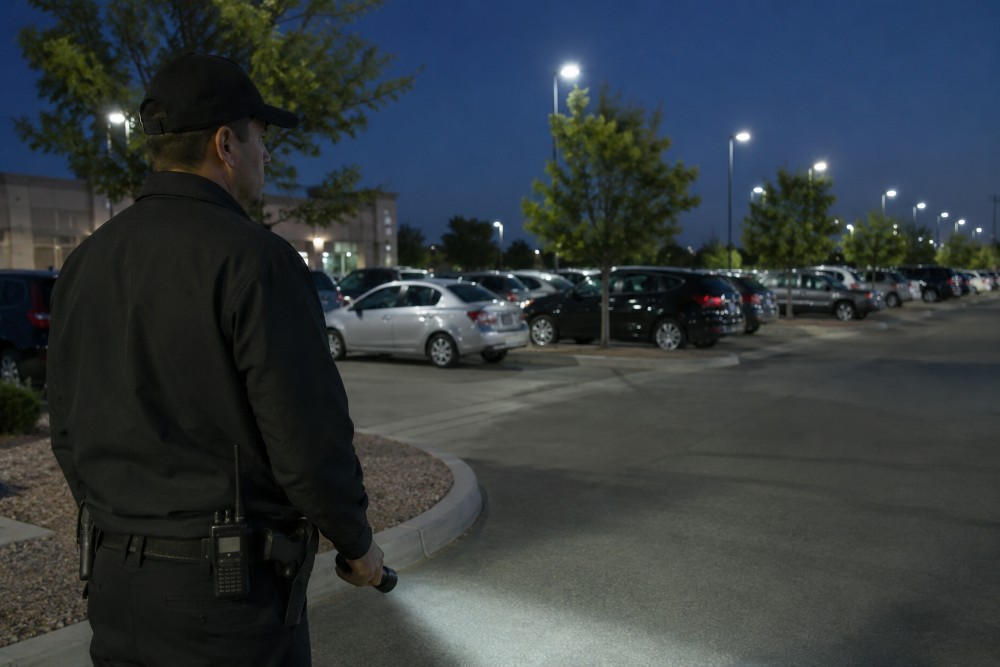
Trained security personnel provide a visible deterrent and real-time response. Patrols can check suspicious activity, assist visitors, document hazards, and respond before minor issues become major incidents.
Security patrols are especially valuable for large lots, late-night operations, retail centers, industrial properties, and locations with repeated incidents.
Clear Signage and Environmental Design
Crime Prevention Through Environmental Design (CPTED) focuses on designing spaces to discourage crime. The Whole Building Design Guide explains that natural surveillance is promoted by features that maximize visibility of people, parking areas, and entrances.
Useful improvements include:
- Trimmed landscaping
- Clear sightlines
- Directional signs
- Marked pedestrian paths
- Visible property rules
- Maintained fencing and barriers
How to Improve Parking Lot Security: Step-by-Step Checklist
Step 1: Conduct a Security Risk Assessment
Start by reviewing crime history, incident reports, lighting conditions, camera coverage, access points, and peak usage times. Walk the lot during the day and after dark.
Step 2: Identify High-Risk Areas
Pay close attention to:
- Entrances and exits
- Isolated corners
- Stairwells
- Payment kiosks
- Loading zones
- Employee parking
- Poorly lit walkways
These areas often need stronger monitoring or design changes.
Step 3: Upgrade Physical Security Measures
Prioritize improvements based on risk. Common upgrades include better lighting, cameras, gates, barriers, emergency call stations, and clearer signage.
Step 4: Establish Monitoring and Response Procedures
Security tools only work when people know what to do. Create procedures for reporting incidents, reviewing footage, contacting law enforcement, documenting hazards, and escalating emergencies.
Step 5: Review and Update Security Regularly
Parking lot security should not be a one-time project. Review systems after incidents, seasonal changes, tenant complaints, or business growth. Quarterly checks can help identify failed lights, blocked cameras, damaged signs, or new blind spots.
Parking Lot Security Best Practices by Property Type
Retail and Shopping Centers
Retail lots need visibility, patrol presence, camera coverage, and traffic flow management. Peak shopping hours and evening closing times deserve special attention.
Apartment Complexes and HOAs
Residential properties should focus on access control, visitor parking rules, lighting, and resident reporting procedures. Tenants want to know management is proactive.
Hospitals, Schools, and Campuses
These properties often have large pedestrian populations and public access. Clear wayfinding, emergency communication, patrols, and monitored entrances are especially important.
Industrial Facilities and Warehouses
Warehouses and logistics properties need to protect vehicles, equipment, loading areas, and restricted zones. Access control and after-hours patrols are often essential.
Common Parking Lot Security Mistakes to Avoid
Avoid these common errors:
- Relying only on cameras without live response
- Installing cameras without addressing lighting
- Ignoring blind spots
- Letting landscaping block visibility
- Failing to document incidents
- Using unclear signs
- Waiting until after a serious incident to act
A secure parking lot depends on prevention, maintenance, and response working together.
FAQ: Parking Lot Security Questions Property Owners Ask
What is the best way to improve parking lot security?
The best approach is layered security: lighting, surveillance, access control, patrols, signage, maintenance, and clear response procedures.
Are security cameras enough for parking lot security?
No. Cameras help document activity, but they work best with lighting, monitoring, patrols, and access control.
How often should parking lot security be reviewed?
Review parking lot security at least quarterly and after any major incident, property change, or repeated complaint.
What properties need parking lot security the most?
Retail centers, apartments, warehouses, hospitals, schools, offices, and any property with regular vehicle or pedestrian traffic benefit from stronger parking lot security.
Does better lighting reduce parking lot crime?
Better lighting improves visibility, supports surveillance, and strengthens natural surveillance principles used in CPTED.
Strengthen Your Parking Lot Security Before Problems Occur
A safe parking lot requires more than cameras. It takes lighting, access control, patrols, environmental design, documentation, and regular review. Property owners who address risks early can improve safety, reduce liability exposure, and create a better experience for customers, tenants, and employees.
For organizations that need a professional assessment or a more complete protection strategy, Instaguard Security can help evaluate vulnerabilities and recommend practical parking lot security solutions based on property needs.