
Table of Contents
What a Security Patrol Actually Does (and What It Is Not)
5 Main Types of Security Patrols
Patrol Type Comparison at a Glance
How to Match Patrol Type to Property Type
Scheduled vs. Random Patrol Patterns
Questions to Ask Before You Hire a Patrol Service
Get a Patrol Plan Matched to Your Property, Not a Template
Key Takeaways
- Vehicle patrol works best for large, spread-out properties and multi-site contracts.
- Foot patrol is the foundation for apartments, hotels, hospitals, and retail.
- A hybrid (static post plus roving patrol) is the most common real-world model.
- Armed coverage is the exception, not the default, and requires separate BSIS permitting.
- Random patrol patterns inside a scheduled coverage window deter better than predictable rounds.
A property manager calls on a Tuesday afternoon. There has been a break-in at one of three buildings she oversees. She wants “patrol coverage” starting Friday.
Sounds simple enough.
Then we ask the questions that matter. How big is the property? Where are the access points? Is anyone on site overnight? What time of day did the break-in happen?
Within ten minutes, “patrol coverage” turns into four different possible plans, none of them interchangeable.
That is the part of the conversation most property owners do not see.
A security patrol is a category, not a product. The right type depends on what you are protecting, where it sits, and from what. Here is how to think about it.
What a Security Patrol Actually Does (and What It Is Not)
A security patrol is a moving security presence that deters, detects, and reports. It is not the same as a static guard post, which holds one location. Patrol officers move along a defined route, log checkpoints, document incidents, and respond to issues as they surface.
In California, every patrol officer must hold a guard registration through the Bureau of Security and Investigative Services (BSIS), and the company deploying them must hold a Private Patrol Operator (PPO) license. That regulatory layer matters because patrol work involves discretion, reporting, and sometimes incident response, all of which carry liability.
5 Main Types of Security Patrols
- Vehicle Patrol (Mobile Patrol)
A vehicle patrol uses a marked or unmarked car to cover a defined route across one property or several. It is the typical choice for sprawling sites: construction zones, industrial yards, storage facilities, multi-acre commercial complexes, and clusters of buildings under one management company.
The strengths are scale and visibility. One marked patrol vehicle can cover ground that would take half a dozen officers on foot. The trade-off is interior response speed; a vehicle patrol cannot quickly reach the fourth floor of an apartment building.
- Foot Patrol
Foot patrol means an officer walking a defined route, checking corridors, stairwells, perimeter doors, parking levels, and common areas. It works best in dense, tenant-facing environments: apartment buildings, hotels, hospitals, retail centers, and corporate offices.
Foot coverage is slower per square foot but stronger per interaction. Tenants see the officer. The officer sees what cameras miss. For most multi-family and hospitality properties, foot patrol is the everyday backbone of security.
- Static Post Plus Roving Patrol (Hybrid)
The hybrid model puts an officer at a fixed point (lobby, gate, dock, cash room) while one or more additional officers rotate through a roving patrol route. It is the most common operational structure for mid-size and larger properties.
Why it shows up so often: most properties have at least one location that needs constant coverage and several other areas that need periodic checks. The hybrid handles both without overspending on headcount.
- Armed Patrol
Armed coverage is the exception, not the rule. Most California properties are well served by unarmed officers. Armed patrol becomes relevant when the risk profile justifies it: certain industrial sites with documented threat history, high-cash environments, and specific executive protection scenarios.
California requires armed officers to hold a BSIS exposed firearm permit on top of their guard registration. Regulations may change, so confirm current requirements with BSIS or qualified counsel before assuming what your property does or does not need.
- Specialty Patrols
A few patrol types come up in conversation but rarely fit a typical California property. Bike patrols are more common on university campuses and outdoor commercial corridors. K-9 patrols have narrow use cases, usually large industrial perimeters. Drone-assisted monitoring is growing for perimeter coverage, but the technology surfaces information; a licensed officer still has to document, respond, and (if it comes to it) testify. If a vendor leads with the gadget rather than the risk assessment, the math is running in the wrong order.
Patrol Type Comparison at a Glance
| Patrol Type | Best Fit | Coverage Speed | Visibility | Typical Cost Profile |
| Vehicle Patrol | Multi-acre sites, construction, storage, multi-property contracts | High | Marked vehicle is highly visible | Mid |
| Foot Patrol | Apartments, hotels, hospitals, retail, offices | Moderate | Highest tenant-facing visibility | Mid to higher (more hours) |
| Static + Roving Hybrid | Most mid-to-large commercial and multi-family properties | Balanced | Strong at fixed posts plus floating coverage | Higher (more total hours) |
| Armed Patrol | High-risk, cash-heavy, or executive protection scenarios | Same as base type | High deterrence | Higher (permit + premium) |
How to Match Patrol Type to Property Type
- Apartments and HOAs: Foot patrol or hybrid coverage. Visibility to residents matters as much as deterrence.
- Construction Sites: Vehicle patrol is the standard, often paired with a static gate post during active hours. Common targets are copper, tools, equipment, and after-hours trespass.
- Self-Storage Facilities: Hybrid coverage. Gate or office static post during operating hours, vehicle patrol overnight. Auction days often call for additional staffing.
- Retail and Commercial Centers: Foot patrol during open hours, vehicle patrol after close.
- Industrial and Warehouse Properties: Vehicle patrol with perimeter checkpoints. Armed coverage only when the risk profile justifies it.
- Hotels and Hospitality: Foot patrol with a fixed presence at the lobby and service entrances.
Scheduled vs. Random Patrol Patterns
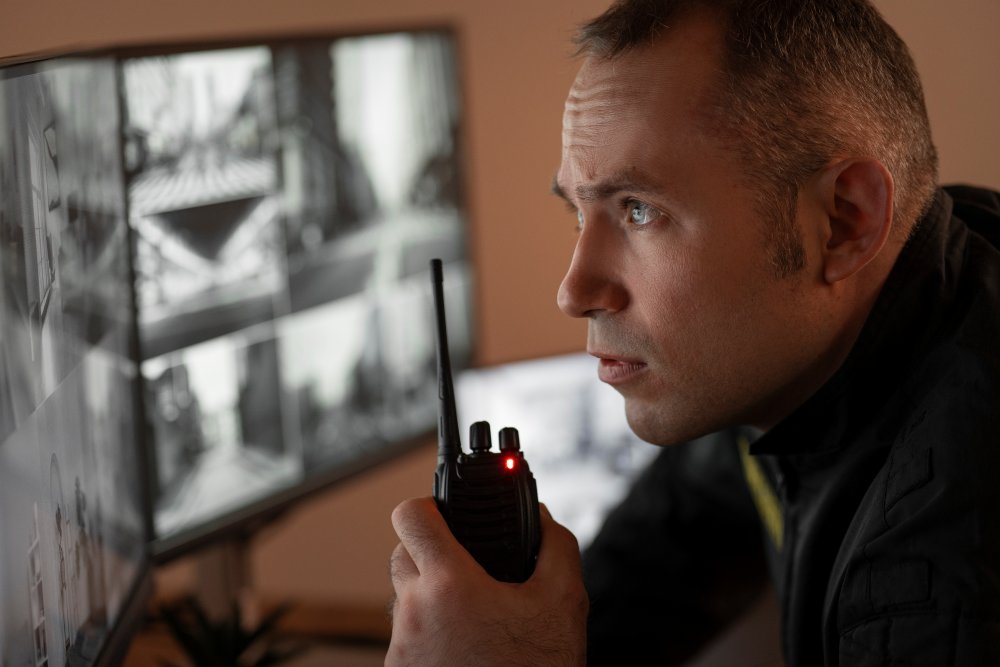
Predictable patrols are easier to plan but easier to anticipate. Random patrols inside a scheduled coverage window are the practical middle ground for most properties. GPS-tracked checkpoints and written patrol logs are the accountability backbone. If a patrol service cannot tell you exactly where its officer was at 2:14 a.m., you do not have a patrol. You have a guess.
Questions to Ask Before You Hire a Patrol Service
- Are your officers BSIS-licensed, and is your company a licensed PPO?
- Will you provide site-specific post orders in writing?
- How are patrols logged (GPS, checkpoint scans, written reports)?
- Who is my single point of contact on site and at the company?
- What is the protocol if an officer finds something during a patrol?
A free consultation should answer all of these before anyone signs a contract.
Get a Patrol Plan Matched to Your Property, Not a Template
Patrol type follows risk, property layout, and budget, in that order. The wrong patrol type is expensive twice: once when you pay for coverage that does not fit, and again when something happens and the coverage cannot reach it.
Instaguard Security has been deploying patrol coverage across LA County and broader California since 2008. We offer vehicle patrol, unarmed guard service with patrol responsibilities, and event and bodyguard coverage where the risk profile calls for it. Free consultations, written quotes, site-specific risk assessments.
Call us today!
Frequently Asked Questions
What is the difference between a security guard and a security patrol?
A security guard typically refers to an officer assigned to a property, often at a fixed post. A security patrol refers to officers in motion: walking, driving, or biking along a defined route to deter, detect, and report. Many properties use both.
How often should a security patrol check a property?
Patrol frequency depends on property size, risk profile, and contract scope. In most cases, properties use scheduled coverage windows with random patrol intervals inside them. The right cadence comes out of a site-specific risk assessment, not a template.
Do security patrol officers carry guns?
Most do not. In California, the majority of patrol assignments use unarmed officers. Armed coverage requires a separate BSIS exposed firearm permit and is generally limited to specific risk profiles. Confirm current requirements with BSIS or qualified counsel.
Are mobile patrols cheaper than on-site guards?
Often, yes, because one mobile patrol vehicle can cover several properties or a large footprint in a single shift. Whether that coverage is enough depends on the risk profile, not the cost difference alone.
Compliance Disclaimer
This content is for informational purposes only and is not legal, insurance, or compliance advice. California security licensing requirements and regulations may change. For a tailored security assessment or to confirm current service options, contact Instaguard Security.