

Table of Contents
Why Apartments Need Dedicated Security Guards
Core Duties of Security Guards in Apartments
What Apartment Security Guards Can and Cannot Do
Armed vs. Unarmed Security Guards for Apartments
How to Evaluate an Apartment Security Guard Provider
Protect Your Property and Residents: Hire a Trained Security Team
Quick Summary
- Apartments with security guards experience measurably lower rates of theft, vandalism, and unauthorized access compared to unsecured properties.
- Core apartment security guard duties include access control, patrol, incident reporting, emergency response coordination, and visitor management.
- Licensed security guards in the United States must meet state-specific training and licensing requirements. Standards vary by state and guard type (armed vs. unarmed).
- On-site security guards provide a deterrence effect that surveillance cameras and intercoms alone cannot replicate.
- Property managers should evaluate security needs based on building size, resident population, crime statistics for the area, and existing physical security infrastructure.
Apartment security is not a luxury feature. It’s a baseline expectation for residents who want to feel safe where they live. Yet the role of apartment security guards is frequently misunderstood: what they actually do, what authorities they hold, and what they can and cannot be asked to handle varies significantly depending on state law, contract scope, and property type.
This guide provides a complete, factual breakdown of apartment security guard duties, how on-site guards reduce crime, what to look for when hiring a security provider, and what residents should know about their own role in building security.
Why Apartments Need Dedicated Security Guards
Multifamily residential properties face security challenges that many commercial buildings do not. Apartment communities manage daily access for residents, guests, vendors, contractors, delivery drivers, rideshare pickups, and maintenance teams, often across multiple entrances, garages, elevators, amenity areas, package rooms, and parking lots.
According to data from the Bureau of Justice Statistics’ National Crime Victimization Survey, urban households experience higher rates of property crime than suburban or rural households. That matters for apartment and multifamily communities, which often operate in denser residential settings with frequent resident, visitor, vendor, delivery, and maintenance traffic. In practice, security risks can increase when shared access points, package rooms, parking areas, lobbies, elevators, and visitor entry systems are not actively monitored.
On-site security guards help close that gap in real time. Cameras can document incidents, but security guards can patrol property, monitor alarms and video systems, control building access, respond to emergencies, and deter criminal activity as issues develop.
What This Means for Apartment Communities
Dedicated apartment security guards provide a visible human presence in the areas where residents and visitors actually move: lobbies, gates, garages, elevators, amenity spaces, loading zones, and parking areas. That presence helps reduce access-control gaps and gives residents, staff, and property managers a faster response option for suspicious behavior, theft, vandalism, package issues, noise complaints, and resident-conflict situations.
Core Duties of Security Guards in Apartments
Access Control
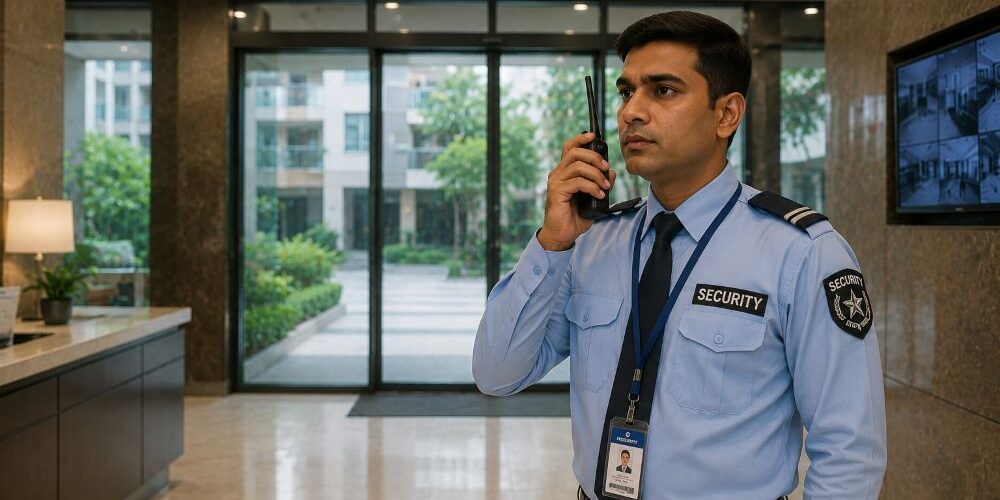
The most fundamental security guard responsibility in any apartment complex is controlling who enters the property.
This includes:
- Verifying resident identification at gatehouse or lobby entry
- Managing visitor sign-in logs
- Confirming delivery personnel credentials before building access
- Operating keycard, buzzer, and intercom systems
- Monitoring controlled entry points during shift hours
Unauthorized access, whether from ex-residents, trespassers, or uninvited individuals, is one of the primary security risks in multifamily housing. A trained guard at the access point is the most direct mitigation.
Property Patrol
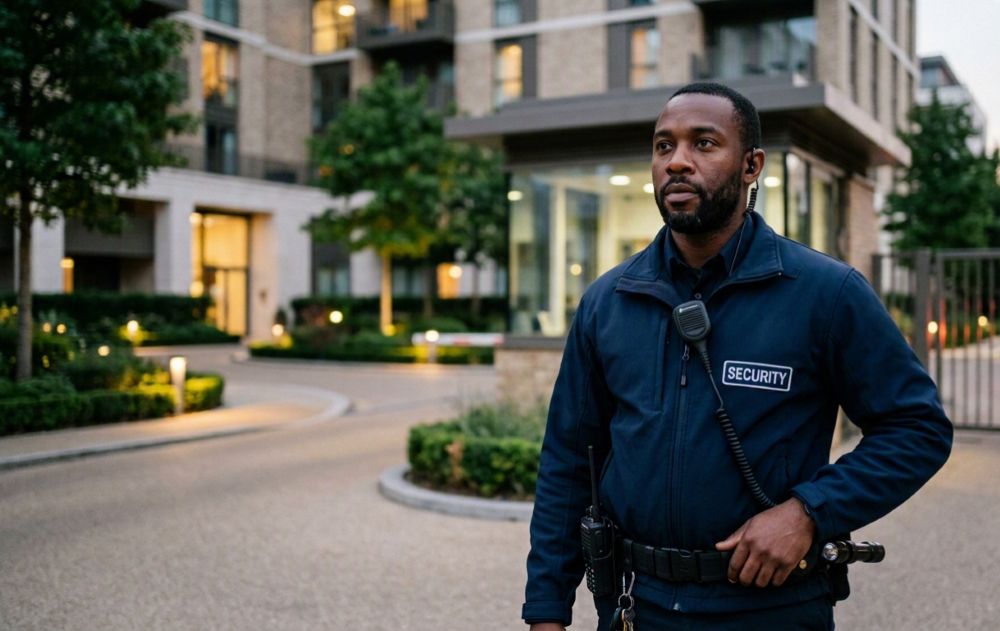
Apartment security guards conduct regular patrols of the property to deter and detect suspicious activity.
Patrol coverage typically includes:
- Parking lots and garages
- Common areas (pool, gym, laundry, mail rooms)
- Stairwells and hallways
- Building perimeter and exterior access points
Patrol frequency and pattern are deliberately varied to prevent predictable schedules that bad actors could exploit.
Incident Response and Reporting
Security guards are trained to respond to, document, and escalate incidents.
This includes:
- Responding to noise complaints and tenant disputes
- Documenting vandalism, vehicle break-ins, and property damage
- Filing written incident reports for property management and law enforcement
- Contacting emergency services (police, fire, EMS) when situations exceed guard authority
Guards do not replace law enforcement. Their role is to observe, respond within their authorized scope, and coordinate with authorities efficiently.
Visitor and Vendor Management
In larger apartment communities, security guards manage the flow of non-resident traffic throughout the day. This includes vendor access, maintenance contractors, cleaning services, move-in/move-out coordination, and guest parking management.
Emergency Coordination
During building emergencies such as fires, medical incidents, and severe weather events, security guards serve as the first organized response resource before EMS or fire departments arrive. Trained guards know building evacuation routes, utility shutoff locations, and emergency contact protocols.
What Apartment Security Guards Can and Cannot Do
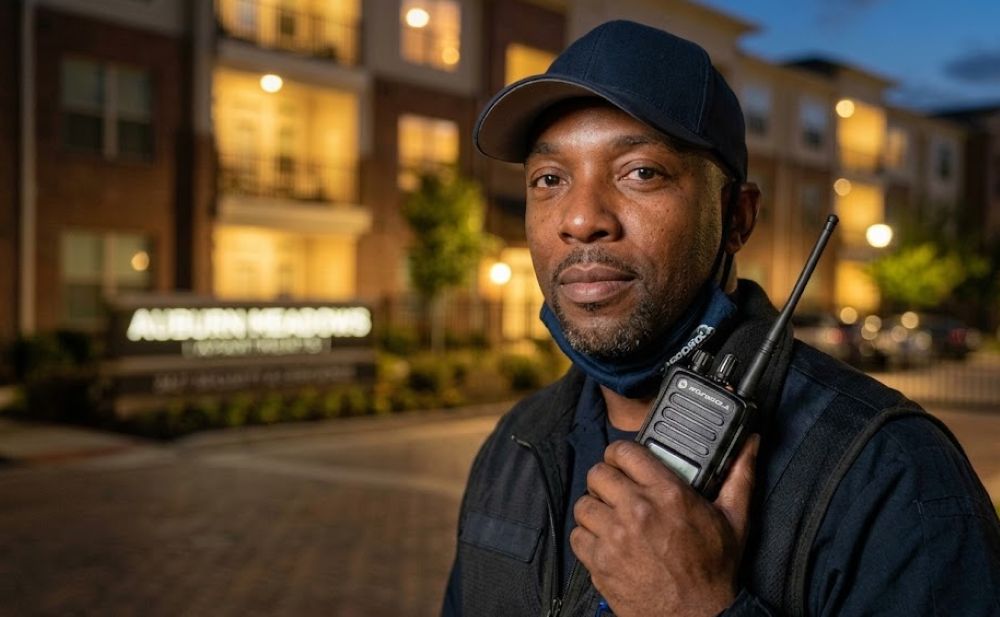
Understanding legal authority is essential for both property managers and residents.
Security guards CAN:
- Request identification from anyone on the property
- Deny access to unauthorized individuals
- Detain a person they witness committing a crime (citizen’s arrest laws vary by state)
- Call law enforcement and provide documentation to support prosecution
- Remove trespassers in coordination with law enforcement
Security guards CANNOT:
- Make arrests (beyond citizen’s arrest provisions in their state)
- Conduct searches of persons or property without consent
- Use force beyond what is legally justified under applicable state law
- Operate beyond the scope of their licensing and contract
State licensing requirements for security guards are regulated at the state level. Most states require a minimum number of training hours, background checks, and registration with a state regulatory body. Armed security guards require additional licensing and firearms qualification.
Armed vs. Unarmed Security Guards for Apartments
The choice between armed and unarmed security guards depends on the property’s risk profile.
| Factor | Unarmed Guard | Armed Guard |
| Deterrence Level | Moderate | High |
| Typical Use Case | Low-to-medium crime areas | High-crime areas, high-value properties |
| Cost | Lower | Higher |
| Liability Considerations | Lower | Higher (requires additional insurance) |
| Training Requirements | Standard licensing | Additional firearms certification |
For most standard apartment communities, unarmed security guards provide effective deterrence. Armed guards are appropriate for properties in high-crime areas, luxury high-rises with high-value amenities, or complexes that have experienced prior violent incidents.
How to Evaluate an Apartment Security Guard Provider
Step 1: Verify State Licensing
Confirm the security company holds a current, active license in your state. Most states maintain a searchable online registry. The individual guards deployed to your property must also hold individual guard licenses.
Step 2: Review Training Standards
Ask specifically about guard training programs: how many hours of initial training, whether ongoing training is required, and whether guards receive property-specific orientation before their first shift.
Step 3: Assess Communication and Reporting Systems
A quality provider should offer digital incident reporting, shift log access for property management, and a supervisor on-call system for escalation outside standard business hours.
Step 4: Confirm Insurance Coverage
Security companies should carry general liability insurance, workers’ compensation, and, for armed guard programs, umbrella liability coverage. Request certificates of insurance before signing any contract.
Step 5: Evaluate Response Time for Coverage Gaps
Ask how the provider handles unexpected absences. A reliable security company maintains a roster of trained guards available to fill vacancies without leaving the property uncovered.
Frequently Asked Questions
What are the main duties of a security guard in an apartment complex?
Core duties include access control, property patrol, visitor and vendor management, incident reporting, and emergency coordination. Guards serve as the first organized response resource for property-related safety concerns.
Do apartments with security guards have lower crime rates?
Not automatically. Security guards do not guarantee lower crime, but they can reduce risk by monitoring access, patrolling the property, responding quickly, and deterring suspicious activity when combined with cameras, lighting, and access control.
Are apartment security guards allowed to detain residents or visitors?
Security guards generally may temporarily detain individuals they witness committing crimes, under citizen’s arrest provisions that vary by state. They may not conduct searches or make formal arrests outside of these provisions.
How much does apartment security guard service cost?
Costs vary by market, guard type, and hours of coverage. Unarmed guard services may range from $18 to $35/hour; armed guard services from $25 to $60/hour depending on location and licensing requirements. For an accurate quote, ask a local provider to assess your property’s entrances, parking areas, package rooms, amenity spaces, and peak-traffic hours before recommending coverage.
What’s the difference between a security guard and a security officer?
In practice, the terms are often used interchangeably, though “security officer” may imply higher training standards or supervisory responsibility. Regulatory designations vary by state.
Protect Your Property and Residents: Hire a Trained Security Team
Apartment security isn’t something to improvise with cameras and a basic intercom. Residents deserve a physical, trained, licensed presence that responds to real situations in real time.
Instaguard provides professional apartment security guard services with licensed, trained personnel, comprehensive incident reporting, and flexible coverage options built around your property’s specific needs. Contact Instaguard today to assess your property and build the right security plan.
READ MORE: Hotel Security Guard Services: A Complete Guide to Keeping Guests Safe