
Key Takeaways
- Security guards actively protect workers through prevention and response
- Their duties include access control, patrolling, monitoring, and emergency response
- Mobile patrol security improves coverage and reduces blind spots
- Visible security presence deters crime before it happens
- Investing in security supports safer, more stable workplaces
Table of Contents
What Do Guards Do to Protect the Worker?
Understanding the Security Guard Job Description
5 Key Security Guard Duties That Protect Workers
How Security Guards Prevent Workplace Incidents Before They Happen
Mobile Patrols in Worker Protection
Security Officer Duties vs. General Guard Duties
Industries That Benefit Most From On-Site Security Guards
Common Misconceptions About Security Guard Duties
Protect Your Workers With Professional Security You Can Rely On
Every workplace has safety policies. Manuals, signage, training sessions. All of that matters, but none of it physically stops a threat when it shows up.
That is where security comes in.
From unauthorized access to workplace conflicts and after-hours risks, businesses deal with real-world problems that require real-time response. This is why understanding security guard duties is not just a compliance exercise. It is about protecting people.
Security guards are not there to “watch.” They are there to prevent, respond, and control situations before they escalate.
What Do Guards Do to Protect the Worker?
At a practical level, the answer is straightforward.
Security guards protect workers by controlling access, monitoring activity, responding to incidents, and maintaining a visible presence that discourages threats before they happen.
That includes:
- Monitoring who enters and exits the property
- Patrolling to identify risks or suspicious behavior
- Responding quickly to emergencies or disturbances
- De-escalating conflicts before they turn physical
- Enforcing workplace safety protocols
If you are asking what do guards do to protect the worker, it comes down to one thing: they reduce risk in real time.
Understanding the Security Guard Job Description
Core Responsibilities of a Security Guard
A standard security guard job description goes far beyond standing at a post.
Security guards are responsible for:
- Protecting employees, visitors, and property
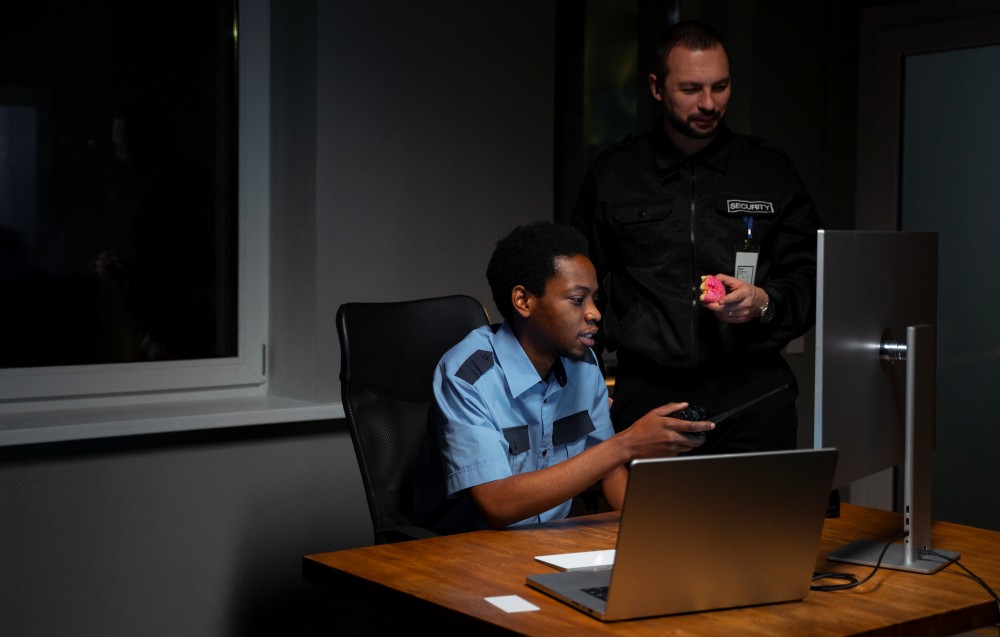
- Monitoring surveillance systems
- Conducting patrols
- Writing incident reports
- Responding to alarms and emergencies
According to the U.S. Bureau of Labor Statistics, security guards are tasked with protecting property, enforcing rules, and monitoring for signs of crime or disorder. That sounds simple until you realize how much responsibility sits behind those actions.
Where Security Guards Typically Work
Security guards are used across industries where worker safety matters:
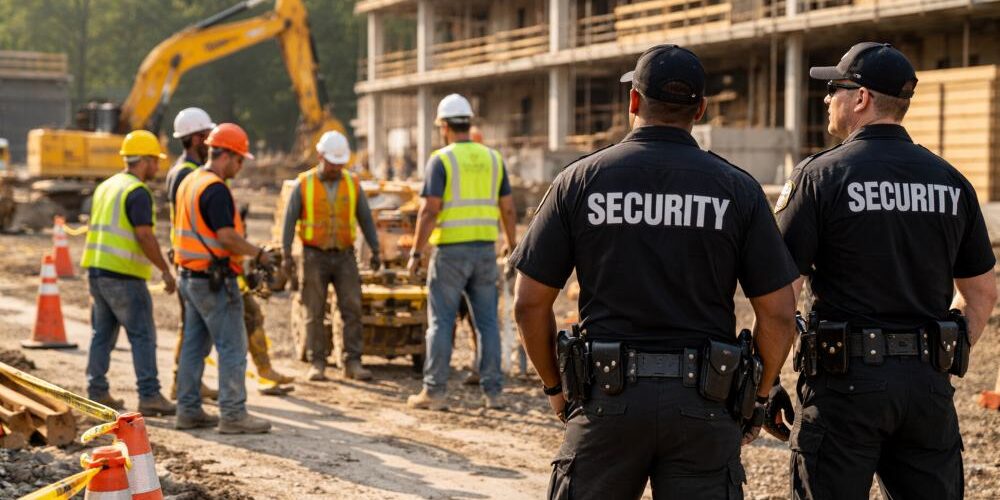
- Construction sites with heavy equipment and open access
- Office buildings with controlled entry points
- Retail stores with theft risks
- Industrial facilities with hazardous operations
- Residential communities with shared spaces
Each setting shapes how security officer duties are carried out.
Why Environment Impacts Security Guard Duties
A guard protecting a construction site at night faces different risks than one stationed at a corporate office during business hours.
That is why duties are adjusted based on:
- Foot traffic
- Access points
- Operating hours
- Risk level
Security is not one-size-fits-all. It is situational.
5 Key Security Guard Duties That Protect Workers
1. Access Control and Visitor Management
This is the first layer of protection.
Guards verify identities, log visitors, and restrict unauthorized access. It sounds basic, but most workplace incidents start with someone being where they should not be.
Controlling entry points directly protects employees from external threats.
2. Active Patrolling of the Property
Patrolling is one of the most effective deterrents.
Guards move through the property to:
- Check vulnerable areas
- Identify hazards
- Monitor activity
Unlike cameras, patrolling creates a human presence that can respond immediately.
3. Monitoring Surveillance Systems
Security guards do not replace technology. They make it useful.
By monitoring CCTV and alarm systems, guards can:
- Spot suspicious behavior early
- Verify threats before escalation
- Coordinate response quickly
Without a trained person behind the system, cameras are just recording problems after the fact.
4. Emergency Response and Incident Handling
When something goes wrong, seconds matter.
Security guards are trained to respond to:
- Medical emergencies
- Fires or safety hazards
- Security breaches
- Workplace disturbances
They act as the first line of response while coordinating with emergency services when needed.
5. Conflict De-Escalation and Workplace Safety
Not every threat is external.
Workplace conflicts happen. Security guards are trained to manage tense situations before they escalate into violence.
According to OSHA, workplace violence remains a significant concern across industries, making de-escalation a critical part of security officer duties.
How Security Guards Prevent Workplace Incidents Before They Happen
Visible Deterrence
Presence matters more than people think.
A visible guard signals that the property is monitored. This alone discourages theft, vandalism, and misconduct.
Criminal behavior often depends on opportunity. Security removes that opportunity.
Identifying Suspicious Behavior Early
Experienced guards are trained to notice patterns.
Unusual behavior, loitering, repeated attempts to access restricted areas. These are early warning signs.
Catching them early prevents escalation.
Reducing Internal and External Threats
Not all risks come from outside.
Security guards enforce workplace policies consistently, helping reduce internal issues such as:
- Unauthorized access
- Policy violations
- Internal theft
It is about accountability as much as protection.
Mobile Patrols in Worker Protection
Why Static Guards Are Not Always Enough
A guard at a front desk cannot see the entire property.
Large facilities, multiple buildings, and outdoor areas create blind spots.
How Mobile Security Patrols Improve Safety
This is where mobile patrol security services come in.
Mobile patrols:
- Cover larger areas efficiently
- Increase visibility across the property
- Respond faster to incidents
Instead of being limited to one location, patrol officers actively monitor multiple zones.
When Businesses Should Consider Patrol-Based Security
Mobile patrol security makes sense for:
- Warehouses and industrial sites
- Apartment complexes
- Retail centers
- Multi-building properties
Companies like Instaguard Security provide mobile security patrols designed for these environments, where coverage matters more than a fixed position.
Security Officer Duties vs. General Guard Duties
What Makes a Security Officer Different
While often used interchangeably, “security officer” can imply a higher level of responsibility.
Security officers may:
- Oversee operations
- Handle complex incidents
- Coordinate with management
When Businesses Need Higher-Level Security
Higher-risk environments often require more experienced personnel, especially where:
- Large workforces are involved
- Sensitive assets are present
- Risks are elevated
Industries That Benefit Most From On-Site Security Guards
Certain industries rely heavily on security to protect workers:
- Construction sites: Prevent trespassing and equipment theft
- Retail: Manage theft and customer-related incidents
- Healthcare: Handle high-stress environments and patient safety
- Industrial facilities: Monitor hazardous areas
- Corporate offices: Control access and maintain order
Each setting reinforces the same idea. Worker safety is not optional.
Common Misconceptions About Security Guard Duties
“They just sit and watch”
In reality, guards are actively monitoring, patrolling, and responding.
“Security is only needed after something happens”
Security is most effective when it prevents incidents, not reacts to them.
“Cameras can replace guards”
Cameras record. Guards act.
Frequently Asked Questions
What is the main duty of a security guard?
The main duty is to protect people and property by monitoring activity, preventing unauthorized access, and responding to incidents.
How do security guards keep employees safe?
They control entry points, patrol the property, monitor systems, and respond quickly to emergencies or conflicts.
Are security guards responsible for emergencies?
They are responsible for initial response and coordination, but they work alongside emergency services when needed.
What skills do security guards need?
Strong observation, communication, quick decision-making, and the ability to stay calm under pressure.
Do all businesses need security guards?
Not all, but businesses with higher risk, larger properties, or public access benefit significantly from having security personnel.
Protect Your Workers With Professional Security You Can Rely On
Worker safety is not something you fix after a problem. It is something you build into your operations from the start.
If your current setup leaves gaps, it is time to rethink it.
Professional security services, including mobile patrol security, give your business real coverage, faster response, and visible protection where it matters most. Instaguard Security works with Los Angeles businesses to create practical security strategies based on actual risk, not guesswork.
Need stronger protection for your employees, property, and daily operations? Contact Instaguard Security today to discuss a security plan tailored to your site, risk level, and business needs.