

Choosing the right type of security guard service is a risk-and-liability decision, not a philosophical one. Most properties deal with everyday threats like theft, trespassing, and disorderly behavior, and those losses add up fast. In retail alone, shrink reached $112.1 billion in 2022, according to the National Retail Federation’s National Retail Security Survey. That’s not a “cost of doing business.” That’s money leaving your building.
Quick Guide
- Armed security is best for high-risk environments with potential for violent crime
- Unarmed security provides strong deterrence for non-violent threats at lower cost
- Risk level should guide the decision, not budget alone
- Public-facing properties often benefit from unarmed guards
- A professional security assessment ensures the right level of protection
What’s Inside This Guide
Understanding the Core Difference
What Armed Security Guard Services Are Designed For
What Unarmed Security Guard Services Are Designed For
Armed vs Unarmed: Risk Assessment Comes First
Public Perception and Environment Matter
Training and Professional Standards
Choosing the Right Security Partner
Get the Right Level of Protection for Your Property
Understanding the Core Difference
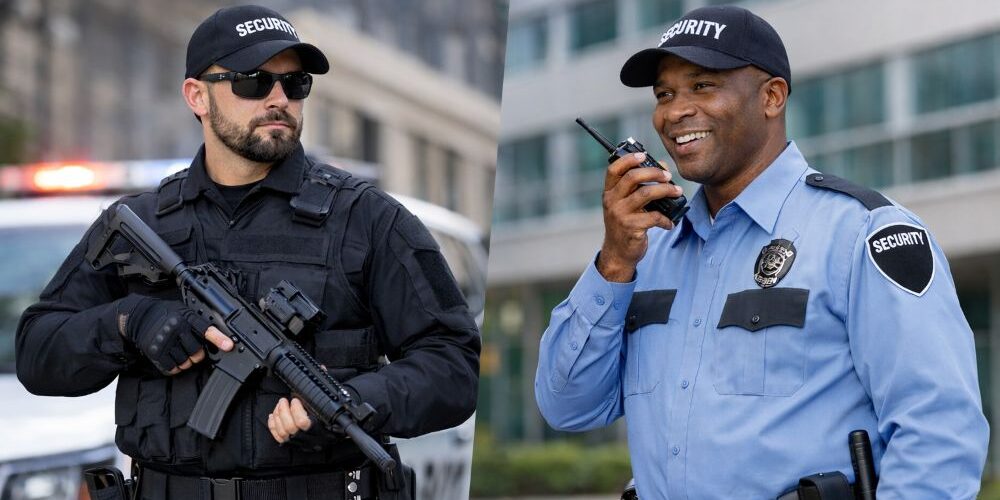
The distinction is simple on paper.
- Armed security guards carry firearms and receive specialized training to use them legally and responsibly.
- Unarmed security guards do not carry firearms and focus on visibility, prevention, monitoring, and incident response.
In practice, the difference affects cost, liability, public perception, and the level of force available if a serious threat occurs.
What Armed Security Guard Services Are Designed For
Armed guards are typically used in high-risk environments where the potential for violent incidents is greater and the consequences of delayed response are severe.
Common Use Cases for Armed Security
- Banks and financial institutions
- Government buildings
- High-value warehouses and distribution centers
- Hospitals and medical facilities
- Construction sites with expensive equipment
- Critical infrastructure
- High-crime locations
- Executive or VIP protection
The presence of a firearm is not about intimidation. It is about deterrence and response capability. Criminals targeting high-value assets are far less likely to engage when they know trained, armed professionals are on site.
Key Benefits of Armed Security
- Stronger deterrent effect against violent crime
- Ability to respond to lethal threats when necessary
- Higher level of perceived protection for staff and assets
- Faster escalation control in extreme situations
Important Considerations
Armed security also comes with higher responsibility.
- Increased liability exposure
- Higher insurance requirements
- More rigorous hiring and background checks
- Ongoing firearms and legal training
- Higher service costs
This is why armed guards should only be deployed when the risk level justifies it. Overusing armed security can create unnecessary expense and liability.

What Unarmed Security Guard Services Are Designed For
Unarmed guards are the most common and widely used security solution across commercial, residential, and public properties. Their role focuses on prevention, presence, and rapid reporting, not force.
Common Use Cases for Unarmed Security
- Office buildings
- Retail stores and shopping centers
- Apartment complexes and HOAs
- Hotels and hospitality venues
- Schools and campuses
- Event venues
- Parking lots and garages
- Corporate campuses
In many environments, crime is opportunistic rather than violent. Visibility and routine patrols alone are enough to discourage theft, vandalism, trespassing, and disorderly behavior.
Key Benefits of Unarmed Security
- Lower cost compared to armed services
- Reduced liability risk
- Approachable presence for employees, residents, and visitors
- Strong deterrence for non-violent crime
- Effective incident documentation and reporting
Unarmed guards are trained in de-escalation, access control, surveillance, and emergency procedures. In many cases, they act as the first line of defense and coordinate with law enforcement when needed.
Armed vs Unarmed: Risk Assessment Comes First
The most common mistake property owners make is choosing based on budget alone. Cost matters, but risk matters more.
| Risk Factor | What to Evaluate | Leans Toward Unarmed Security | Leans Toward Armed Security |
| Type of Crime | Most likely threats on the property | Theft, trespassing, vandalism, disorderly conduct | Violent crime, armed robbery, credible threats |
| Asset Value | What is being protected | Low to moderate value assets | High-value equipment, cash, sensitive materials |
| Public Access | Who can enter the property | Public-facing, high foot traffic, customer-focused | Restricted access, controlled entry, limited public |
| Legal & Insurance Requirements | Industry or contract obligations | No mandate or preference for unarmed coverage | Armed guards required or strongly recommended |
| Security Visibility | Desired presence and tone | Professional, approachable deterrence | Strong, high-authority deterrent signal |
Public Perception and Environment Matter
Security is not just about stopping crime. It is also about how people feel on your property.
- In corporate offices, schools, retail spaces, and residential communities, unarmed guards often create a safer and more comfortable atmosphere.
- In high-risk or regulated environments, armed guards communicate seriousness and preparedness.
There is no universal answer. The right choice balances protection with professionalism and public comfort.
Training and Professional Standards
Regardless of whether guards are armed or unarmed, quality depends on training, oversight, and experience.
Reputable security companies invest in:
- Thorough background checks
- State-compliant licensing
- Ongoing training and certifications
- Clear use-of-force policies
- Strong supervision and accountability
Armed guards receive additional firearms training, legal education, and scenario-based drills. Unarmed guards focus more heavily on observation, communication, de-escalation, and emergency response. The difference is not competence. It is the scope of responsibility.
Cost Differences Explained
Armed security services cost more for clear reasons:
- Higher wages due to increased risk and training
- Insurance and bonding costs
- Firearms certification and requalification
- More extensive compliance requirements
Unarmed security offers a cost-effective solution for properties that need consistent coverage without the risks associated with firearms.
A blended approach is also common. Some properties use unarmed guards during normal operations and armed guards during overnight hours or high-risk periods.
Choosing the Right Security Partner
Whether you choose armed or unarmed security, the provider matters more than the uniform.
Look for a company that:
- Conducts site-specific risk assessments
- Offers both armed and unarmed services
- Understands local laws and regulations
- Customizes security plans instead of selling packages
- Maintains strong training and supervision standards
Companies like Instaguard Security focus on building tailored security solutions based on actual risk, not assumptions. This approach helps clients avoid unnecessary costs while maintaining effective protection.
Frequently Asked Questions
1. What is the difference between armed and unarmed security guards?
Armed security guards carry firearms and are trained to respond to high-risk or violent situations. Unarmed security guards do not carry weapons and focus on deterrence, monitoring, access control, and incident reporting.
2. When should a property hire armed security guards?
Armed security is appropriate for high-risk properties such as banks, hospitals, government facilities, high-crime locations, or sites with valuable assets where violent threats are more likely.
3. Are unarmed security guards effective?
Yes. Unarmed guards are highly effective for preventing theft, vandalism, trespassing, and disorderly behavior through visibility, patrols, and rapid response coordination with law enforcement.
4. Is armed security more expensive than unarmed security?
Armed security services cost more due to advanced training, firearms certification, higher insurance requirements, and increased liability. Unarmed security is more cost-effective for low to moderate risk environments.
5. How do I choose between armed and unarmed security services?
The decision should be based on a professional risk assessment that considers crime history, asset value, public access, liability concerns, and regulatory requirements.
Get the Right Level of Protection for Your Property
Armed and unarmed security guard services do different jobs. Neither is “better.” The right fit depends on risk level, environment, liability, and what you’re actually trying to protect.
If you want a clear recommendation based on your property, Instaguard Security can evaluate your site and match you with the right guard type and coverage plan, without turning it into a hard sell or a one-size-fits-all package.