

Key Takeaways
- Fire watch guards provide temporary fire safety when systems fail
- They perform continuous patrols and identify hazards early
- Detailed logging is required for compliance and accountability
- They act as the first line of response in emergencies
- Fire watch services are often legally required in high-risk situations
Table of Contents
When Are Fire Watch Guards Required?
Key Responsibilities of Fire Watch Guards
What Fire Watch Guards Do Not Do
Why Fire Watch Services Matter
How to Choose the Right Fire Watch Security
Need Reliable Fire Watch Guards?
When a building’s fire protection system goes offline, the risk does not pause. Sprinklers fail. Alarms stop working. Construction sites leave gaps in safety. That is where fire watch guards step in.
They are not passive observers. They are trained personnel responsible for actively preventing fires, identifying hazards early, and ensuring immediate response if something goes wrong.
This guide breaks down exactly what fire watch security does, when you need it, and why it matters.
What Is Fire Watch Security?
Fire watch security is a temporary but critical safety measure used when a building’s fire protection systems are not working properly or when the property is facing a higher-than-normal fire risk.
This often happens when sprinkler systems are shut down, fire alarms are out of service, construction work is underway, or hot work such as welding creates added danger.
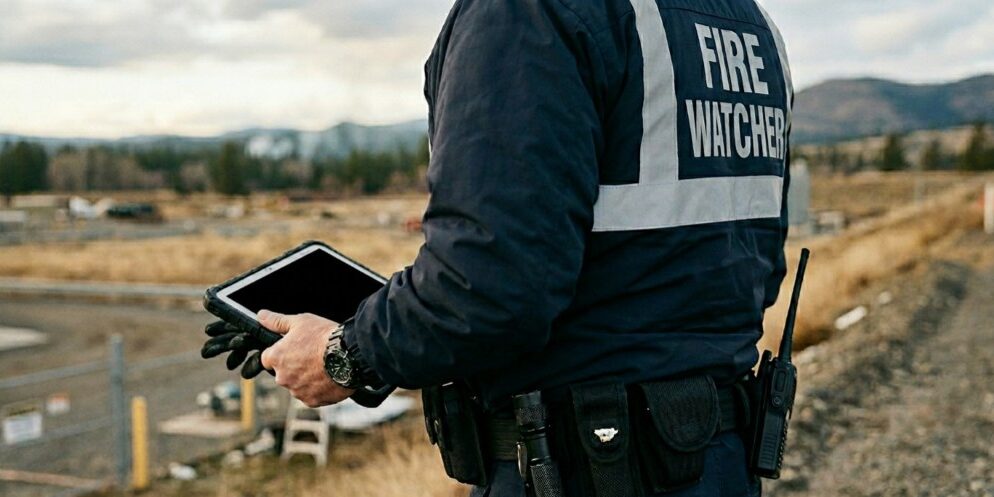
In these situations, fire watch guards are assigned to actively monitor the property and reduce the risk of a fire going unnoticed. Their role is not passive. They are there to stay alert, move through the site, and respond quickly if they spot anything unsafe.
Fire watch guards are typically responsible for:
- Patrolling designated areas at regular intervals
- Watching for signs of smoke, heat, open flames, or unsafe conditions
- Identifying potential fire hazards before they become serious
- Keeping detailed logs of patrol times, observations, and incidents
- Alerting emergency services immediately if a fire or serious hazard is detected
- Helping the property remain compliant with local fire codes and safety requirements
In many cases, having a fire watch is not optional. Local fire marshals, building officials, or other authorities may require it until the fire protection systems are restored or the hazardous activity is completed. The goal is simple: protect people, property, and operations during periods when the normal level of fire protection is compromised.
When Are Fire Watch Guards Required?
Fire watch services are typically required when a property faces a heightened risk of fire or when its normal fire protection systems are no longer fully operational. In other words, when the built-in safeguards are down or the environment becomes more hazardous, someone needs to monitor the property closely and continuously. That is where fire watch guards come in.
Their presence helps reduce risk, protect occupants, and satisfy safety requirements until the issue is corrected or the high-risk activity is over.
Common Scenarios
Fire alarm system failure
If a building’s fire alarm system stops working, occupants may not receive an early warning in the event of smoke or fire. In this situation, fire watch guards are often required to patrol the property and watch for signs of danger until the system is repaired.
Sprinkler system shutdown
A sprinkler system is one of the first lines of defense against a spreading fire. When it is shut down for maintenance, damage, or unexpected failure, the property becomes far more vulnerable. Fire watch guards help fill that temporary safety gap with active, on-site monitoring.
Construction or renovation projects
Construction zones often involve exposed wiring, temporary equipment, dust buildup, and changing site conditions. Renovation work can also interfere with alarms, sprinklers, and exit access. Fire watch services are commonly used to keep these sites under close observation while work is in progress.
Hot work operations (welding, cutting, etc.)
Activities such as welding, torch cutting, brazing, and grinding create sparks and heat that can ignite nearby materials. Because of that, hot work is one of the most common reasons a fire watch is required. Guards monitor the area during and sometimes after the work is completed to catch any smoldering hazards before they turn into a fire.
Events with large crowds
Temporary events, concerts, festivals, and other crowded gatherings can increase fire risk due to equipment use, temporary structures, cooking stations, or blocked access points. Fire watch guards help monitor the space, maintain awareness of hazards, and support emergency response if needed.
Vacant or high-risk properties
Empty buildings, older structures, and properties with a history of safety concerns may also require fire watch coverage. A vacant site can still face risks from faulty electrical systems, trespassing, vandalism, or unnoticed fire hazards. Fire watch guards provide a layer of oversight that helps keep the property protected.
Key Responsibilities of Fire Watch Guards
1. Continuous Patrols
Fire watch guards regularly patrol the entire property, checking for potential fire hazards such as:
- Exposed wiring
- Flammable materials
- Equipment overheating
- Blocked exits
2. Hazard Identification and Prevention
Guards are trained to recognize risks before they escalate. This includes:
- Improper storage of combustible materials
- Unsafe work practices
- Signs of smoke or unusual heat
3. Maintaining Fire Watch Logs
Detailed documentation is a core part of the job. Logs typically include:
- Patrol times
- Observations
- Incidents or hazards identified
- Actions taken
4. Emergency Response and Coordination
If a fire or hazard is detected, fire watch guards act immediately by:
- Alerting occupants
- Contacting the fire department
- Assisting with evacuation procedures
5. Ensuring Compliance with Fire Codes
Fire watch guards help property owners meet local regulations and avoid penalties. Authorities often require:
- Continuous monitoring
- Documented patrols
- Immediate reporting of incidents
What Fire Watch Guards Do Not Do
It is important to understand the scope of their role. Fire watch guards are there to monitor, document, and respond to fire-related risks, but their responsibilities have clear limits.
Fire watch guards:
- Do not replace firefighters
They are trained to identify hazards, report emergencies, and help initiate evacuation procedures, but they are not a substitute for the fire department.
- Do not repair fire systems
If an alarm, sprinkler, or suppression system is down, fire watch guards monitor the property until licensed technicians restore it. They do not perform technical repairs or maintenance.
- Do not act as general security unless specified
Their primary assignment is fire prevention and fire-related safety monitoring. They may observe suspicious activity, but their role is not the same as standard security patrol unless that service is specifically included.
- Do not ignore non-fire tasks in order to “multi-task”
Their focus must remain on fire hazards, patrol routes, and safety checks. They are not there to be pulled into unrelated site duties that distract from fire watch responsibilities.
- Do not serve as building inspectors or code officials
Fire watch guards help support compliance by documenting conditions and maintaining patrol logs, but they do not issue citations, approve buildings, or enforce code as an authority.
- Do not take the place of property managers or maintenance staff
They may report blocked exits, hazardous storage, or unsafe conditions, but correcting those issues usually falls to the property owner, manager, or maintenance team.
- Do not provide emergency medical care beyond their level of training
Some may have basic emergency response knowledge, but they are not automatically EMTs or medical professionals unless separately certified.
- Do not remain stationary if the assignment requires active patrols
Fire watch is generally an active duty role. In many cases, guards are expected to move through designated areas at set intervals rather than sit at a desk or entry point.
- Do not make safety risks disappear on their own
Their presence reduces risk through monitoring and fast reporting, but they do not eliminate the underlying issue. If a fire alarm system is down or hot work is underway, the actual hazard still exists.
- Do not stay on site indefinitely without a reason
A fire watch is usually a temporary measure. It remains in place until the fire protection system is restored, the hazardous activity ends, or the authority having jurisdiction says it is no longer required.
Why Fire Watch Services Matter
Fire risks increase significantly when systems are down or environments are unstable. Fire watch guards reduce that risk by adding a human layer of protection.
Benefits:
- Immediate hazard detection
- Faster emergency response
- Compliance with regulations
- Reduced liability for property owners
- Increased safety for occupants and workers
In short, they help prevent small issues from turning into costly disasters.
How to Choose the Right Fire Watch Security
Not all fire watch services are equal. When selecting a provider, focus on:
- Training and certification of guards
- Response time and availability
- Clear reporting and documentation
- Experience in similar environments
- Ability to adapt to different risk levels
A reliable team should be able to step in quickly and operate with minimal disruption.
Frequently Asked Questions
1. What is the main duty of a fire watch guard?
To monitor a property for fire hazards, perform regular patrols, and respond immediately to any signs of danger.
2. How often do fire watch guards patrol?
Typically every 15 to 30 minutes, depending on local regulations and risk level.
3. Is fire watch security required by law?
Yes, in many cases. Local fire departments can mandate fire watch services when systems are down or risks are elevated.
4. Can security guards perform fire watch duties?
Only if they are specifically trained and assigned for fire watch responsibilities. It is a specialized role.
5. How long do you need fire watch services?
Until fire protection systems are restored or the hazard is fully resolved.
Need Reliable Fire Watch Guards?
If your property requires immediate fire watch coverage, working with an experienced team makes all the difference. From construction sites to commercial buildings, trained professionals ensure safety, compliance, and fast response when it matters most.
Get dependable fire watch services from a team that adapts to your situation. Call Instaguard Services today.